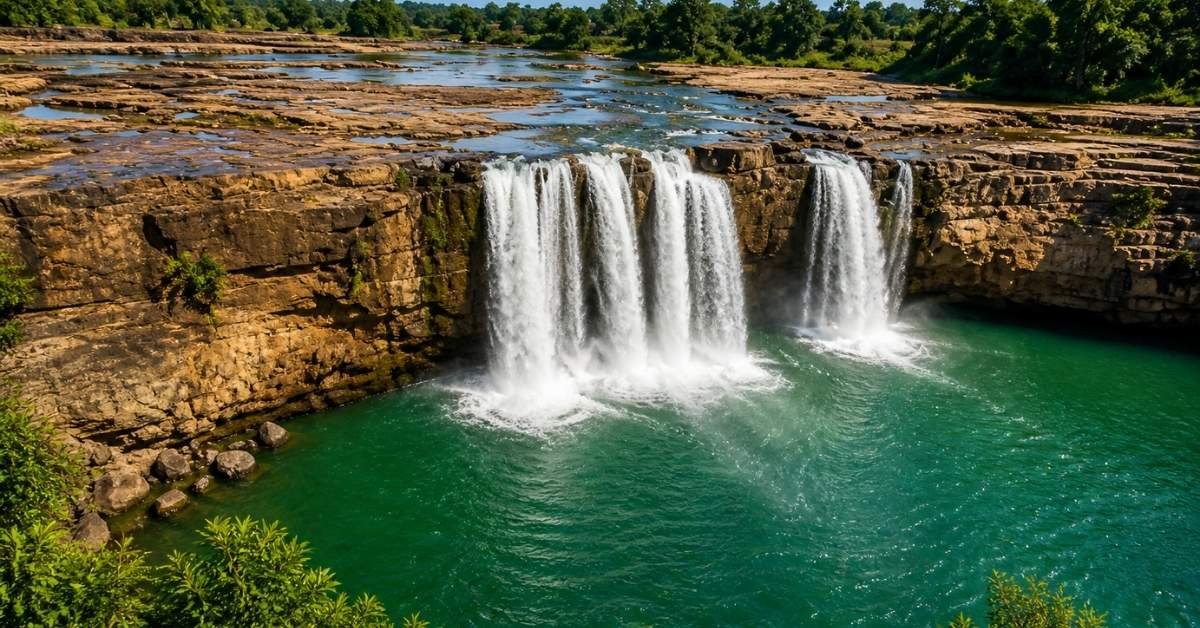
Chitrakot waterfall is on the Indravati River in Bastar district, Chhattisgarh, about 38 km from Jagdalpur city. It drops nearly 29 meters and stretches up to 300 meters wide during monsoon. The best time to visit is July to February, depending on what experience you want.
Most people only know Niagara Falls. But India has its own version. Chitrakot waterfall earns that comparison because of its horseshoe shape and jaw-dropping monsoon width. No other waterfall in India matches it for sheer size during peak flow.
This guide cuts straight to what matters. Which month gives you red-water views? When can you actually go boating? What do you pack? Every section answers real questions that travelers ask before booking a trip.
Whether you are planning months ahead or leaving next week, this is the only seasonal and practical guide to Chitrakot waterfall you will need.
Why Is Chitrakot Waterfall Called the Niagara of India?

Two things make Niagara Falls famous worldwide. Its horseshoe shape and its massive width. Chitrakot waterfall shares both of these qualities, and that is exactly why the comparison exists.
The Indravati River flows through the thick forests of Bastar district in Chhattisgarh. At one point, the riverbed drops sharply by about 29 meters. The water does not fall in a straight line. It curves. That curve creates a wide, horseshoe-shaped cascade that looks strikingly similar to Niagara Falls in North America.
The Width Is What Makes It Truly Unique
During dry months, the waterfall is already impressive. But when monsoon rains arrive, everything changes. The Indravati River swells with rainwater from the surrounding forests and hills. As more water rushes over the edge, the waterfall stretches wider and wider.
At peak monsoon, Chitrakot waterfall can reach up to 300 meters in width. That makes it the widest waterfall in India during this season. No other waterfall in the country comes close to that measurement when the rains are at full strength.
A Waterfall That Earns Its Title
Many places in India carry famous nicknames that feel exaggerated. This one does not. The horseshoe shape is real. The 300-meter monsoon width is documented. The 29-meter drop is consistent.
Chitrakot does not just borrow the Niagara name for tourism marketing. The geography backs it up. That is what separates it from other waterfalls in India.
Best Time to Visit Chitrakot Waterfall

No single answer works for every traveler. The waterfall looks and feels completely different depending on the month you arrive. Here is a clear breakdown to help you pick the right season.
Season Comparison at a Glance
| Feature | Monsoon (July to October) | Winter (November to February) |
| Water Color | Deep red-brown from river silt | Clear and white |
| Flow and Width | Maximum flow, up to 300 meters wide | Steady and calm, width reduces |
| Boating | Closed due to strong currents | Open and safe |
| Photography | Dramatic and powerful shots | Clean, detailed, and bright shots |
| Crowd Level | Moderate | Higher, especially on weekends |
Monsoon: Come for the Raw Power
From July to October, the Indravati River carries heavy rainfall from the surrounding forests straight over the edge. The water turns a deep red-brown color because of the soil and silt it picks up along the way. The fall stretches to its full width and the roar of the water is something you feel in your chest, not just hear.
This is the season for views and videos. However, boating is completely shut down during this time. The currents are too strong and unpredictable. Authorities close the river access for visitor safety.
Winter: Come for the Experience
From November to February, the water clears up and turns white. The flow becomes calmer and the mist around the falls is gentle rather than overwhelming. This is when boating opens up and you can get close to the base of the waterfall.
Photographers prefer this season because the light hits the white water cleanly. Early mornings give you soft mist and golden light together.
If you want to do both, visit in late October or early November when the transition happens.
How to Reach Chitrakot Waterfall

Getting to Chitrakot waterfall takes some planning. The falls are deep inside Bastar district, so you need to connect through the right hubs. Here is the clearest route depending on where you are coming from.
By Air
The nearest major airport is Swami Vivekananda Airport in Raipur. It is about 285 km from the waterfall. Most major Indian cities have direct flights to Raipur. Once you land, you can hire a cab or take a bus toward Jagdalpur city, which is your main base for the trip. You can search and book flights to Raipur on MakeMyTrip to compare prices and plan your travel dates.
By Train
Jagdalpur railway station is the closest major railhead to Chitrakot waterfall. Several trains connect Jagdalpur to cities like Raipur, Visakhapatnam, and Bhubaneswar. You can check train availability and book tickets directly on IRCTC. Once you reach Jagdalpur, the waterfall is about 38 km away.
By Road
From Jagdalpur, reaching Chitrakot is straightforward. You have two main options.
- Hire a taxi: Most drivers in Jagdalpur know the route well. A round trip with waiting time is easy to arrange near the railway station or bus stand.
- Auto-rickshaw: Available for shorter budgets but better suited for those traveling light.
- Self-drive: The road from Jagdalpur to Chitrakot is paved and manageable for most vehicles.
The drive takes roughly 45 to 60 minutes depending on road conditions and season.
Planning a Road Trip in India?
Stop guessing! Calculate your exact fuel cost for Petrol, Diesel, CNG, or EV trips instantly.
🚗 Calculate Fuel Cost NowAccommodation and Facilities Near Chitrakot Waterfall
Where you stay makes a big difference at Chitrakot. You can either be right next to the falls or base yourself in Jagdalpur city and drive in each day. Both options work, depending on your budget and travel style.
Stay Right at the Waterfall
The best option closest to the falls is Dandami Luxury Resort. It is managed by the Chhattisgarh government tourism board, which means it is reliable, well-maintained, and officially vetted. Staying here puts you within minutes of the waterfall. You can catch early morning mist views and sunset light without rushing from a distant hotel.
Rooms book up fast during peak winter months. If you are planning a trip between November and February, it is strongly recommended to reserve in advance. You can check availability and make bookings through the official Chhattisgarh Tourism website.
Budget Options in Jagdalpur
If Dandami Luxury Resort is outside your budget, Jagdalpur city is your next best base. It is about 38 km from the waterfall and has a solid range of guesthouses, budget hotels, and homestays. Prices are significantly lower here and the city gives you access to local food, markets, and other nearby attractions.
On-Site Facilities at the Waterfall
The waterfall area has basic facilities for day visitors.
- Public restrooms are available near the viewing area
- Small food stalls and tea shops operate near the entrance
- Parking space is available for cars and buses
Places to Visit Near Chitrakot Waterfall
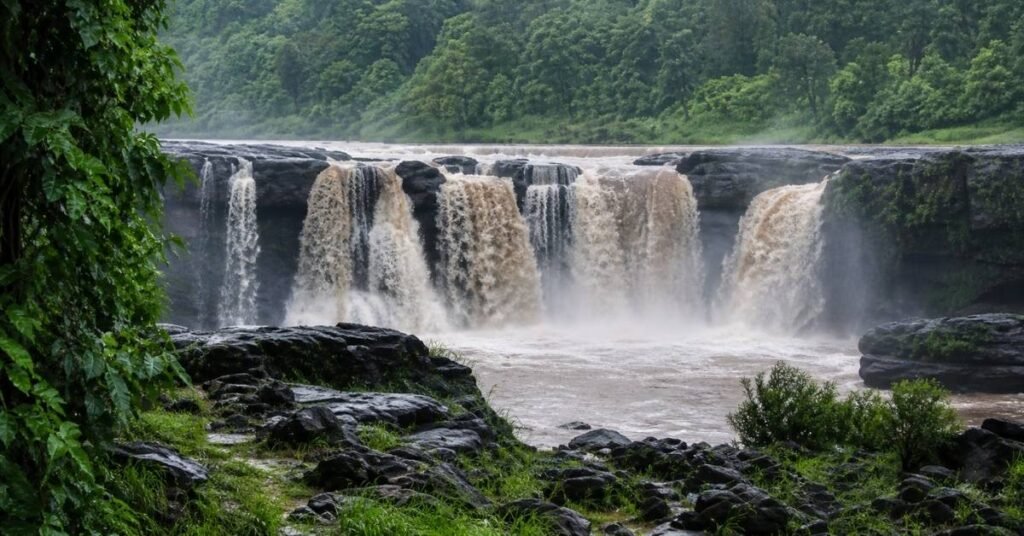
Chitrakot is the headline attraction, but Bastar district holds more than one waterfall and a network of natural wonders. If you are already making the trip, these two stops are worth adding to your itinerary.
Tirathgarh Waterfall
Tirathgarh is a completely different experience from Chitrakot. Instead of one dramatic single drop, the water here cascades down in a series of steps and blocks, spreading across a wide rocky surface covered in white foam. It looks like a giant natural staircase with water rushing down every level.
The surrounding area is lush and green, with a small temple nearby that adds a cultural layer to the visit. The walk down to the base of the falls is manageable for most visitors and gives you close-up views of the tiered flow.
Quick facts:
- Located near Jagdalpur city in Bastar district
- Works well as a combo day trip with Chitrakot
- Best visited during and just after monsoon when flow is strong
- Entry is easy and the area is well connected by road
Kutumsar Caves
Kutumsar Caves are among the most fascinating natural formations in central India. These are deep limestone caves that go underground for a significant stretch. Inside, you find stalactites and stalagmites that have formed over thousands of years. Guided tours take you through narrow passages with proper lighting installed along the route.
One critical detail every visitor must know: Kutumsar Caves are strictly closed during monsoon season. The caves flood and become dangerous during heavy rains, so authorities shut access completely from around June to October.
Quick facts:
- Located in Kanger Valley National Park, Bastar
- Open from approximately November to May only
- Guided entry is mandatory, no solo exploration allowed
- A rare and genuinely unique underground experience in this region
Safety Tips and Final Verdict
Chitrakot is a rewarding destination. A few practical safety points will make your trip smooth and worry-free.
Is Bastar Safe for Tourists?
This question comes up often and the answer is straightforward. The tourist zones in Bastar district, including Chitrakot waterfall, Tirathgarh, and Kutumsar Caves, are considered safe for visitors. Thousands of travelers visit every season without incident. Local authorities maintain a visible presence at major tourist spots. Stick to marked tourist routes and you will have no issues.
Water Safety at the Falls
Never attempt to swim in the Indravati River near the waterfall at any time of year. During monsoon, the currents are extremely powerful and unpredictable. Even experienced swimmers face serious risk. During winter, the water appears calm but the rocks beneath the surface are slippery and uneven.
When boating is open during winter months, always wear the life jacket provided by the operator. Do not skip this step regardless of how confident you feel.
Final Verdict
Chitrakot waterfall is not just another waterfall on a travel checklist. It is a place that genuinely changes depending on when you show up. Red and thunderous in monsoon. White and peaceful in winter. Both versions are worth experiencing.
If you can only go once, visit in November. You get clear water, open boating, comfortable weather, and the full visual impact of the horseshoe shape without the monsoon crowd chaos.
This is one destination in central India that consistently delivers exactly what it promises.
Frequently Asked Questions About Chitrakot Waterfall
Q1. What is the best time to visit Chitrakot waterfall?
The best time depends on what you want. Visit between July and October for maximum water flow and the dramatic red-water monsoon view. Visit between November and February for clear white water, boating, and comfortable weather for photography.
Q2. How far is Chitrakot waterfall from Jagdalpur?
Chitrakot waterfall is approximately 38 km from Jagdalpur city. The drive takes around 45 to 60 minutes by road depending on conditions.
Q3. Is boating available at Chitrakot waterfall?
Boating is available during the winter season, roughly November to February, when the river currents are safe. It remains closed during monsoon months due to strong and dangerous water flow.
Q4. Why is Chitrakot waterfall called the Niagara of India?
Chitrakot earns this title because of its horseshoe shape and its width of up to 300 meters during monsoon, making it the widest waterfall in India. These two features closely mirror what makes Niagara Falls famous.
Q5. Is it safe to visit Bastar district as a tourist?
Yes. The tourist areas of Bastar district including Chitrakot waterfall are safe for visitors. Local authorities maintain presence at all major attractions and thousands of tourists visit every season without problems.
Q6. What is the nearest airport to Chitrakot waterfall?
Swami Vivekananda Airport in Raipur is the nearest major airport, located approximately 285 km from Chitrakot waterfall. From Raipur, travelers can hire a cab or take transport to Jagdalpur and then proceed to the falls.