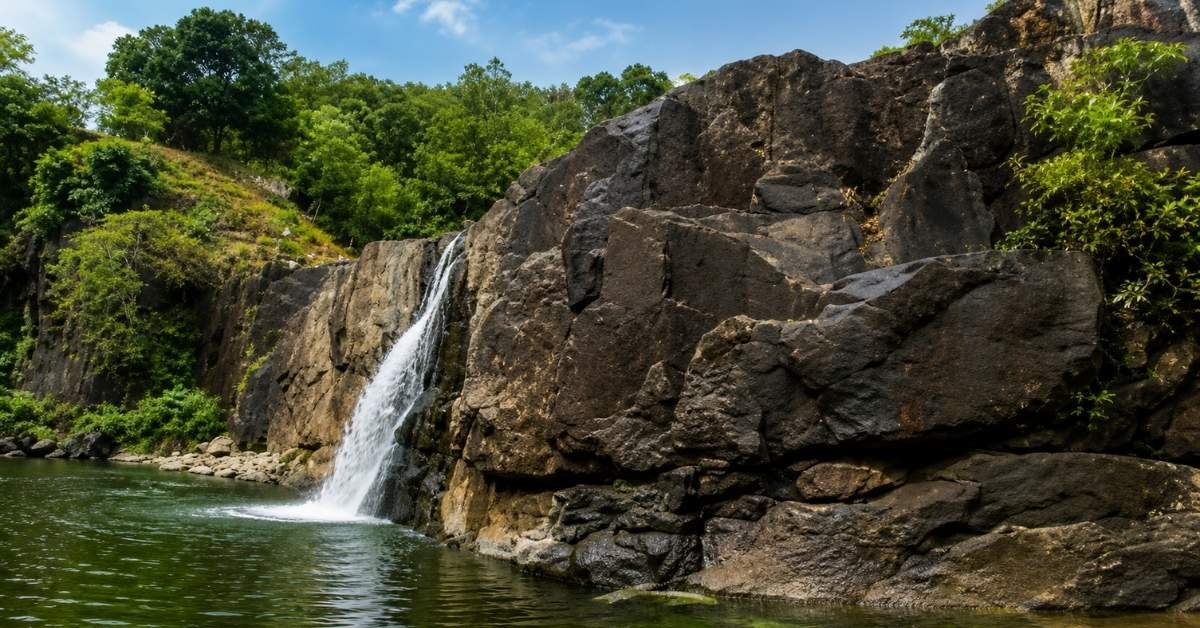
Bastar waterfall count crosses 8 stunning locations. Chitrakote and Tirathgarh lead the list. Jagdalpur is your best base camp. Monsoon and post-monsoon are peak seasons. All waterfalls are reachable by road from Jagdalpur within 2 hours.
Chhattisgarh holds some of the most powerful and least crowded waterfalls in all of India. The Bastar district, deep in the heart of the country, gives you dense forests, tribal culture, and roaring rivers all in one place.
This guide covers 8 waterfalls across Bastar, from the wide and thundering Chitrakote on the Indravati River to the stepped beauty of Tirathgarh inside Kanger Valley National Park. You will also discover smaller, hidden falls that most tourists never find.
Why Bastar is the Ultimate Waterfall Destination
Bastar sits in southern Chhattisgarh, spread across one of the largest forested regions in central India. The land is shaped by ancient rock formations, deep river gorges, and thick sal and teak forests. This geography creates the perfect conditions for powerful, year-round waterfalls.
The Kanger Valley National Park alone covers over 200 square kilometers of dense forest. The Kanger River and its tributaries cut through limestone and sandstone terrain, carving out dramatic drops and cascades. Tirathgarh waterfall, one of the tallest in Chhattisgarh at 299 feet, exists because of this unique river system inside the park.
What makes Bastar different from other waterfall destinations in India is simple. The crowds are thin, the roads are manageable, and the waterfalls are genuinely wild. You are not watching water fall from behind a railing with five hundred other tourists. You are standing in open forest, hearing the fall before you see it.
Bastar also offers variety that very few regions can match. Chitrakote on the Indravati River is a massive perennial waterfall active throughout the year. Mendri Ghumar and similar hidden falls are seasonal, at their best during and just after monsoon. This means Bastar rewards visitors differently depending on when they arrive.
3 strong reasons to choose Bastar for a waterfall trip:
- Raw, untouched nature: Forest cover remains thick and wildlife activity is high around most waterfall zones
- Easy access from Jagdalpur: All 8 waterfalls covered in this guide are within 40 km of the city
- Genuinely uncrowded: Even popular falls like Chitrakote draw far fewer visitors than comparable spots in other states
The Giants: Chitrakote and Tirathgarh Waterfalls
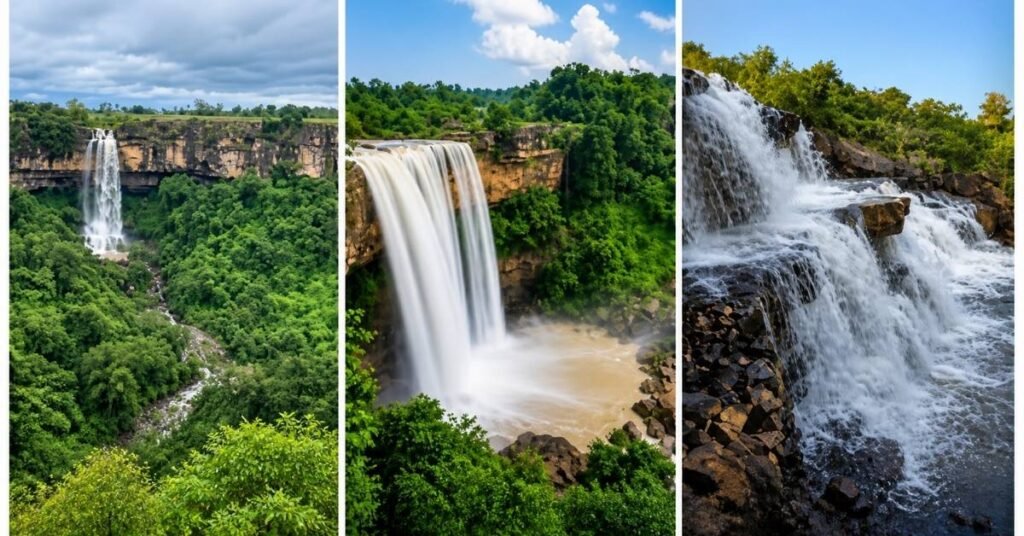
Bastar has many waterfalls, but two stand clearly above the rest in size, power, and visual impact. Chitrakote and Tirathgarh are the two anchors of any serious waterfall trip to this region. Both are accessible from Jagdalpur, and both will leave you with a strong sense of just how powerful Indian rivers can be when they meet ancient rock.
Chitrakote Waterfall
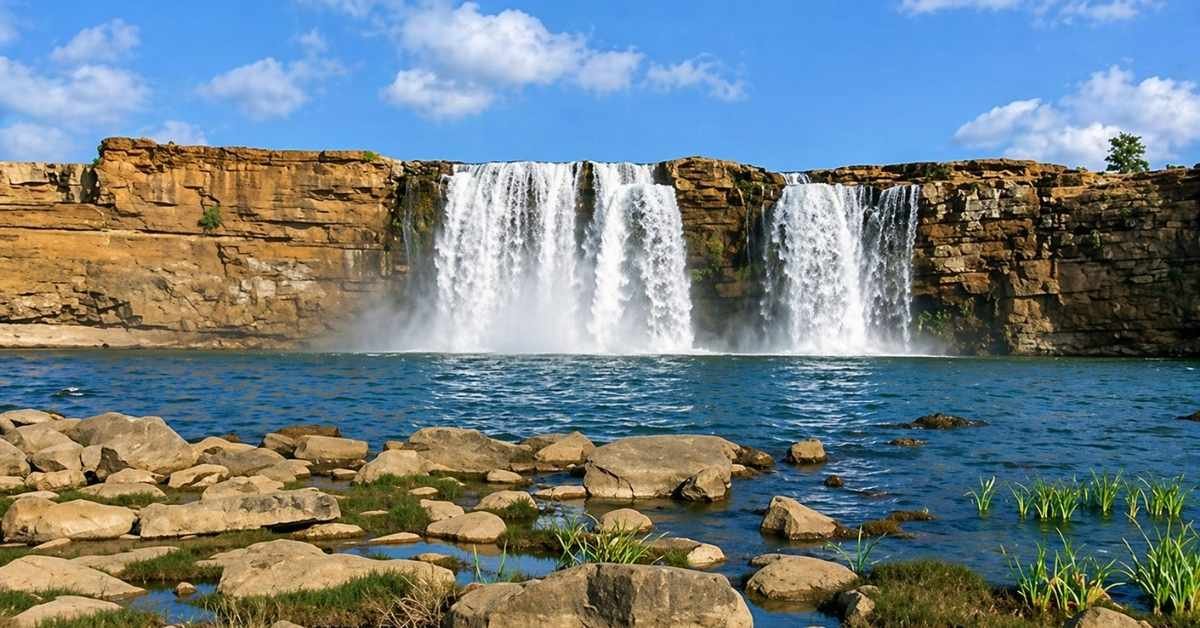
Chitrakote waterfall is located on the Indravati River, approximately 38 km from Jagdalpur. The waterfall drops 95 feet, which is roughly 29 meters, over a wide curved rock face. During monsoon season, the width of this fall expands dramatically, making it the widest waterfall in India at its peak flow.
The shape of Chitrakote is horseshoe-like, with the Indravati River spreading across the rock before plunging down in a broad, unbroken wall of white water. The sound during peak monsoon is overwhelming. You can hear it from a significant distance before the fall comes into view. The mist from the base rises high enough to soak you within minutes of getting close.
The surrounding landscape is equally striking. Thick forest lines both banks of the Indravati River, and the red-orange soil of the Bastar plateau contrasts sharply with the white foam of the fall. At the base, the river churns and turns green as it settles downstream through forested gorges.
Chitrakote is a perennial waterfall, meaning it runs every month of the year. However, the volume and visual impact are highest between July and October. For complete details on visiting this fall, check the Bastar Official Tourism website.
Tirathgarh Waterfall
Tirathgarh waterfall is located inside Kanger Valley National Park, fed by the Munga Bahar river. It drops a total of 299 feet, which is approximately 91 meters, making it one of the tallest waterfalls in Chhattisgarh. Unlike a single sheer drop, Tirathgarh follows a block-type step fall structure. The water breaks across multiple rock ledges before reaching the bottom, giving it a tiered and layered appearance.
The most distinctive feature of Tirathgarh is its colour. The water takes on a milky white appearance as it breaks across each step. This effect comes from the high aeration of the water as it tumbles repeatedly over the rocky tiers. The result is a fall that looks almost like flowing white silk against the dark green forest backdrop.
The Kanger Valley National Park ecosystem adds significant depth to a visit here. The park is home to dense mixed forests, rare cave systems like Kotumsar Cave, and a rich variety of birdlife. Walking toward Tirathgarh through the park trails means the waterfall reveals itself gradually through the tree cover. The approach itself is part of the experience.
A small stream system around the base of Tirathgarh creates a network of shallow pools and rivulets that are safe to walk around during post-monsoon months. The greenery at the base stays lush and thick even during drier months, fed by the constant spray from the falling water above.
Planning a Road Trip in India?
Stop guessing! Calculate your exact fuel cost for Petrol, Diesel, CNG, or EV trips instantly.
🚗 Calculate Fuel Cost NowThe Scenic Wonders of Bastar

Beyond the giant falls of Chitrakote and Tirathgarh, Bastar holds a second layer of waterfall experiences. These three falls are smaller in scale but rich in atmosphere. Each one offers something distinct, and together they make a strong case for spending more than just one or two days exploring the district.
Mendri Ghumar Waterfall
Mendri Ghumar is a seasonal waterfall located roughly 13 km from Chitrakote. Because it is close to Chitrakote on the same route from Jagdalpur, most travellers can visit both in a single day without much extra effort. The road from Jagdalpur to Chitrakote covers approximately 38 km, and Mendri Ghumar falls along this path.
The waterfall flows at full strength during and after the monsoon season. Outside of this window, the flow reduces significantly, which is why timing your visit between July and November matters here more than at perennial falls. During peak season, the water drops from a forested cliff edge into a rocky basin below.
What makes Mendri Ghumar special is the forest setting around it. Thick trees line the cliff above the fall, and the entire area feels enclosed by green. There are no large crowds, no permanent stalls, and no noise beyond the water and the forest. It is a clean and raw waterfall experience that rewards travellers who go slightly off the main path.
Tamda Ghumar
Tamda Ghumar is a perennial waterfall, meaning it flows throughout the year. It is located near the village of Mardum, which falls on the route toward Chitrakote from Jagdalpur. Travellers heading to Chitrakote can plan a short stop here without significantly adding to their travel time.
Unlike seasonal waterfalls that draw visitors only during monsoon, Tamda Ghumar offers a reliable and peaceful stop across all seasons. The surrounding environment is quiet and largely free from heavy tourist activity. The water moves steadily over dark rocks, and the banks around the fall are forested and calm.
This is not a dramatic or thundering waterfall. Its value is in its stillness. Travellers who want a moment away from movement and noise will find Tamda Ghumar an easy and rewarding pause on the Chitrakote road.
Chitradhara Waterfall
Chitradhara waterfall is located in Potanar village, a short distance from Jagdalpur. The waterfall flows over a wide stretch of rocky terrain rather than dropping from a single high point. The water spreads across the rocks in thin sheets and channels, creating a natural flat cascade that covers a broad surface area.
This structure makes Chitradhara particularly suited for visitors who want to get close to moving water without the risk of standing near a powerful vertical drop. Families with children and groups looking for a relaxed outdoor stop tend to find this fall well matched to their needs. The flat rocky expanse around the water serves as a natural gathering space.
The route from Jagdalpur to Potanar village is manageable and does not require any specialist vehicle. The village itself is small and the waterfall is accessible on foot from the nearest road point. The area around Chitradhara stays green through much of the year due to the shallow water moving constantly across the rock surface.
Offbeat and Hidden Cascades
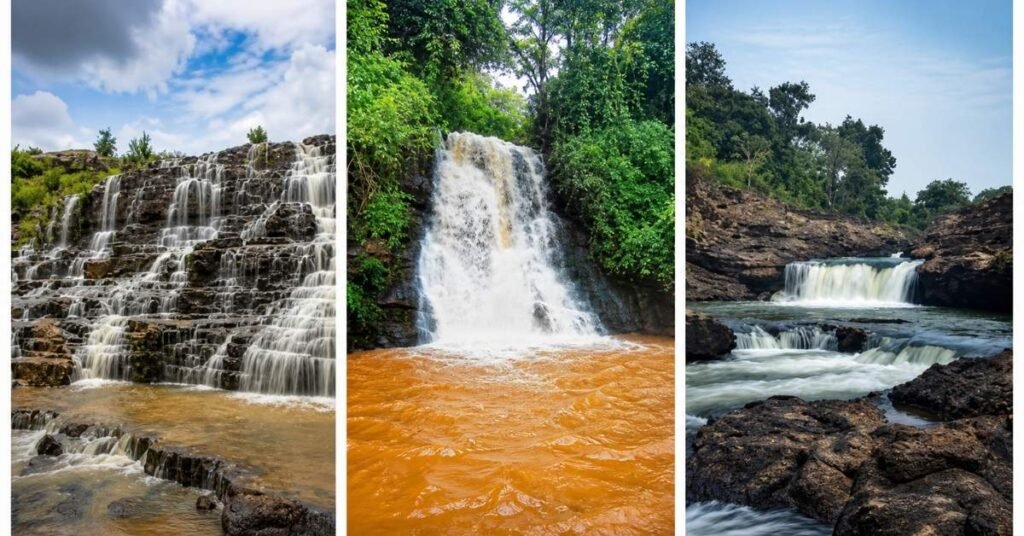
Most tourists who visit Bastar stop at Chitrakote and Tirathgarh and consider the trip complete. That leaves three more waterfalls almost entirely to those willing to go a little further. Mandwa, Topar, and Kanger Dhara are the least visited falls in the district, and for travellers who value solitude and raw terrain, they are worth every extra kilometre.
Mandwa Waterfall
Mandwa waterfall is a step fall located 31 km from Jagdalpur. Like Tirathgarh, it does not drop in a single sheer plunge. Instead, the water moves down in stages across layered rock, giving it a structured and almost architectural appearance. At the base, the water feeds directly into the Kanger River, which continues its course through the forested valley below.
The terrain around Mandwa is rocky and uneven. The path to the fall requires some walking on unpaved ground, making sturdy footwear important. The surrounding forest is dense, and the Kanger River visible from the waterfall area adds to the overall scenic depth of the location.
Topar Waterfall
Topar waterfall sits in one of the more remote parts of the Bastar forest zone. It is not a mainstream tourist stop, and reaching it requires comfort with forest roads and some degree of navigation. For travellers who actively seek out untouched natural spaces, Topar delivers exactly that.
The fall itself moves through thick forest terrain with minimal human infrastructure around it. There are no permanent facilities, no crowds, and no curated viewpoints. What you get is a genuinely wild waterfall in its natural state, surrounded by the dense green of central Indian forest.
Kanger Dhara
Kanger Dhara is a natural cascade found deep inside Kanger Valley National Park. It is smaller than the major falls in the region but sits within one of the most ecologically rich forest zones in Chhattisgarh. The cascade flows over natural rock formations through the park’s interior, making it a rewarding find for those already exploring the park.
| Name | Distance from Jagdalpur | Type of Fall |
| Mandwa Waterfall | 31 km | Step Fall |
| Topar Waterfall | Forest interior, Bastar zone | Natural cascade |
| Kanger Dhara | Inside Kanger Valley National Park | Natural cascade |
How to Reach and the Best Time to Visit

Reaching Bastar
Jagdalpur is the central hub for all waterfall travel in Bastar. Every fall covered in this guide is reachable from Jagdalpur within two hours by road. The city has its own airport with limited connectivity, so most travellers route through Raipur first.
Raipur is the nearest major city with strong air and rail connections to the rest of India. From Raipur, Jagdalpur is approximately 300 km by road.
Travel options from Raipur to Jagdalpur:
- By train: Regular trains connect Raipur to Jagdalpur. The journey takes between 8 to 10 hours depending on the service.
- By road: State highways connect both cities. Private taxis and state buses operate this route regularly. Road travel takes approximately 6 to 7 hours.
- By air: Jagdalpur airport receives limited flights. Check current schedules before planning around this option.
Once in Jagdalpur, hiring a local taxi or auto for the day is the most practical way to cover multiple waterfall locations. For official transport and tourism planning support, visit the Chhattisgarh Tourism Board.
Best Time to Visit
The waterfall experience in Bastar is heavily tied to rainfall and river flow.
- July to November is the strongest window. Monsoon fills every river and stream, bringing all falls to full volume and power.
- October and November offer the best balance. Water flow remains high, roads are clearer, and forest conditions are safer.
- Avoid visiting during heavy flood alerts. River banks near Chitrakote and other falls can become dangerous when water levels rise sharply after continuous rainfall.
- December to February is suitable for general sightseeing, but seasonal falls like Mendri Ghumar will be dry or very low during this period.
Where to Stay and Travel Tips
Jagdalpur is the right place to base yourself for the entire waterfall circuit. The city offers a range of accommodation options to match different budgets. Budget travellers will find clean guesthouses and government rest houses at reasonable rates. Those looking for a more immersive experience can choose from eco-resorts and forest lodges on the outskirts of the city that place you closer to the natural environment.
Booking in advance is strongly recommended if you are travelling between July and November, as this is peak season and good properties fill up quickly.
Pro Travel Tips:
- Carry cash: ATM availability is limited near most waterfall locations outside Jagdalpur
- Wear anti-slip footwear: Wet rocks around falls like Chitradhara and Mandwa can be slippery and dangerous in regular sandals
- Hire local guides: For hidden falls like Topar and Kanger Dhara, a local guide saves time and keeps you on safe paths
- Start early: Reaching falls by morning gives you better light, cooler temperatures, and fewer visitors
- Pack light rain gear: Mist and spray near large falls like Chitrakote will soak regular clothing quickly
Bastar waterfall travel is not a polished resort holiday. It is something more honest than that. These are real rivers, real forests, and real natural power that most of India has not yet discovered. Pack your bags and go find what Chhattisgarh has been quietly holding for centuries.
Frequently Asked Questions
How many waterfalls are there in Bastar district?
Bastar district has at least 8 notable waterfalls. These include Chitrakote, Tirathgarh, Mendri Ghumar, Tamda Ghumar, Chitradhara, Mandwa, Topar, and Kanger Dhara. Chitrakote and Tirathgarh are the most visited, while Topar and Kanger Dhara remain largely offbeat.
Which is the biggest waterfall in Bastar Chhattisgarh?
Chitrakote is the widest waterfall in Bastar and in all of India during peak monsoon season. It sits on the Indravati River, 38 km from Jagdalpur, and drops 95 feet across a broad horseshoe-shaped rock face. Tirathgarh is the tallest, dropping 299 feet inside Kanger Valley National Park.
What is the best time to visit waterfalls in Jagdalpur?
July to November is the best time to visit waterfalls near Jagdalpur. Monsoon brings all rivers to full volume, activating even seasonal falls like Mendri Ghumar. October and November offer the best combination of strong water flow, safer road conditions, and comfortable weather.
Are the waterfalls in Bastar safe to visit?
Most waterfalls in Bastar are safe when visited responsibly. Avoid standing on wet rocks without anti-slip footwear. Do not visit river-edge falls like Chitrakote during active flood alerts. For remote falls like Topar, always travel with a local guide who knows the terrain.
Which waterfalls in Bastar are inside Kanger Valley National Park?
Tirathgarh waterfall and Kanger Dhara are both located inside Kanger Valley National Park. Tirathgarh is the primary attraction, fed by the Munga Bahar river and dropping in steps across 299 feet. Kanger Dhara is a smaller natural cascade deeper inside the park, best visited while already exploring the park interior.
How do I reach the hidden waterfalls in Bastar district?
Jagdalpur is your starting point for all hidden waterfalls in Bastar district. Hire a local taxi or guide from the city for falls like Topar and Kanger Dhara, as these require forest road navigation. Mendri Ghumar and Tamda Ghumar are accessible on the Chitrakote road and easier to reach independently.