

The best way to spend time in Srikalahasti is to split your visit into three parts: start with the Srikalahasteeswara Temple for spiritual darshan, head out to nearby waterfalls like Talakona or Veyilingala Kona for nature, and end with shopping for handmade Kalamkari textiles. This mix is what makes Srikalahasti different from most temple towns.
We first visited Srikalahasti on a quiet weekday morning, and the town surprised us. It sits on the banks of the Swarnamukhi River, and the moment we crossed the bridge, the air felt calmer. The temple here is one of the five Pancha Bhoota Stalams, sacred sites linked to the five elements, and this one represents Vayu, or air. People come from all over India for the Rahu-Ketu Pooja, a ritual believed to ease astrology doshas.
But Srikalahasti is not just about the temple. Just a short drive away, we found waterfalls hidden in green hills and small art shops where artisans paint cloth by hand using natural dyes. We will walk you through everything we found, so you can plan your own trip with confidence.
Srikalahasteeswara Temple: Where Air Becomes Divine

The Srikalahasteeswara Temple sits at the heart of this town, and it is the reason most people visit. This is one of the five Pancha Bhoota Stalams in India, sacred shrines where Lord Shiva is worshipped as one of the five elements. Here, he takes the form of Vayu, or air. Inside the sanctum, the lingam is believed to be Swayambhu, meaning it formed on its own rather than being carved by hand. A lamp placed near it flickers without any visible breeze, which devotees see as proof of Vayu’s presence.
What draws the biggest crowds, though, is the Rahu-Ketu Pooja. Rahu and Ketu are shadow planets in Hindu astrology, and their unfavorable position in a horoscope is said to cause delays in marriage, career setbacks, health issues, and mental unrest. Devotees travel from across India to perform this pooja, hoping for relief. We watched several families complete the ritual together, and the mood inside was calm and focused, not rushed.
If you are planning your visit, a few details will help.
| What to Know | Details |
| Temple Hours | 5:30 AM to 9:00 PM daily |
| Rahu-Ketu Pooja Timing | 6:00 AM to 6:00 PM |
| Best Time to Visit | Early morning, between 6:00 AM and 8:00 AM on weekdays – |
| Entry | Free general darshan; special darshan tickets available at the counter |
| Best Season | October to March, since summers can get quite hot – |
A few tips from our own visit:
- Reach before 6 AM if you want a peaceful darshan with shorter lines.
- Weekends get crowded fast, so plan a weekday trip if you can.
- Free Annadanam, a community meal, is served near Gate No. 4 from around 11:30 AM, and no registration is needed. –
- Dress modestly, since this is an active place of worship.
For updated pooja slots or online booking, you can check the temple’s official website before you go.
More Spots Worth Your Time in Srikalahasti

Once you finish the main temple, the town still has plenty to offer. Here are three places we think deserve a spot on your list.
Bhakta Kannappa Temple
This small shrine sits on a hillock right next to the main temple, and it honors Kannappa, a tribal hunter who offered his own eyes to Lord Shiva out of pure devotion. To reach it, you will need to climb close to 300 stone steps, which usually takes 15 to 20 minutes depending on your pace.
It is worth the effort. From the top, we got a full view of Srikalahasti town, the Swarnamukhi River, and the main temple’s gopuram below. This is the best viewpoint in town, hands down. Go early morning or late evening to avoid the heat, and carry water since there are no shops on the way up.
Bharadwaja Tirtham
This is a peaceful tank located east of the main temple, set between three hills. According to local belief, the sage Bharadwaja meditated here during ancient times. At the center stands a small Vinayaka statue, often called Thapo Vinayaka, surrounded by water on all sides.
We found this spot far quieter than the main temple complex. It is a good place to sit for a while, especially if the crowds at Srikalahasteeswara Temple feel overwhelming.
Sahasra Linga Temple
Locally known as Veyilingala Kona, or the Valley of Thousand Lingas, this temple lies inside a forest about 8 km from town. As the name suggests, it holds a single large Shiva linga carved with a thousand smaller lingas on its surface. A small waterfall flows nearby, and locals believe the water here has properties that help with certain skin conditions.
Since it sits inside forest land, keep an eye out for monkeys along the path, and try to visit earlier in the day.
Nature and Waterfalls Near Srikalahasti
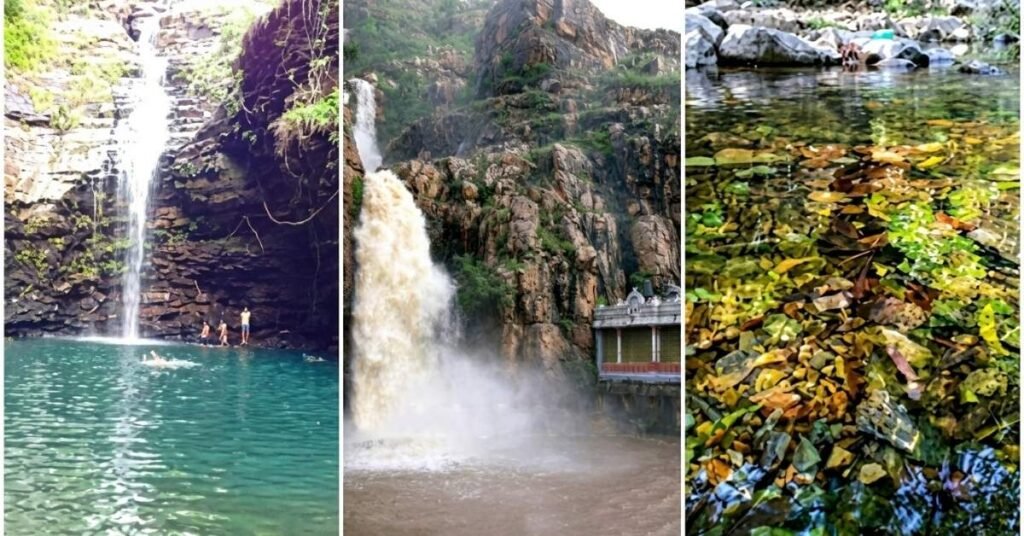
Srikalahasti is not only about temples. Within an hour or two, you can reach forests, waterfalls, and quiet pools that feel completely different from the temple crowds. Here are three nature spots we recommend, based on distance and effort.
Veyilingala Kona Waterfalls
Just 8 km from town, this is the closest and easiest waterfall trip from Srikalahasti. Locals also call this spot the Valley of Thousand Lingas, since the area around the falls is dotted with rock formations shaped like lingas. It sits inside a forest, and you may need to cross a couple of small hillocks to reach it. Keep an eye out for monkeys along the trail. Since this is so close, it works well as a half-day add-on after your temple visit.
Kapila Theertham
This one is a bit farther out, near Tirupati itself, but worth mentioning if you are combining your trip with a Tirumala visit. Water from mountain streams drops from a height of over 100 feet into a large pond inside the Kapileswara Swamy Temple complex. It sits at the base of the Sheshadri Hills. The waterfall is most active during the monsoon, so time your visit between July and September for the best flow.
Talakona Waterfalls
If you have a full day to spare, Talakona is the one to chase. At 270 feet, it is the highest waterfall in Andhra Pradesh, set inside the Sri Venkateswara National Park. The forest around it is thick and home to several rare species, so the drive alone feels like a small adventure. Locals believe the water carries healing properties because of the herbs in the surrounding hills. Plan for a full day trip since the road winds through dense forest.
Here is how these three compare:
| Spot | Distance from Srikalahasti | Best For | Travel Time |
| Veyilingala Kona | 8 km | Quick half-day trip | 20-30 mins |
| Kapila Theertham | Around 45 km | Combining with Tirumala visit | 1 to 1.5 hours |
| Talakona Waterfalls | 58 km from Tirupati | Full-day nature trip | 1.5 to 2 hours |
Our honest tip: if you only have time for one, pick Veyilingala Kona for convenience or Talakona if you want a real nature escape. October to February is the best window for all three, since the weather stays cool and water flow is steady.
Shopping in Srikalahasti: Take Home a Piece of Kalamkari Art
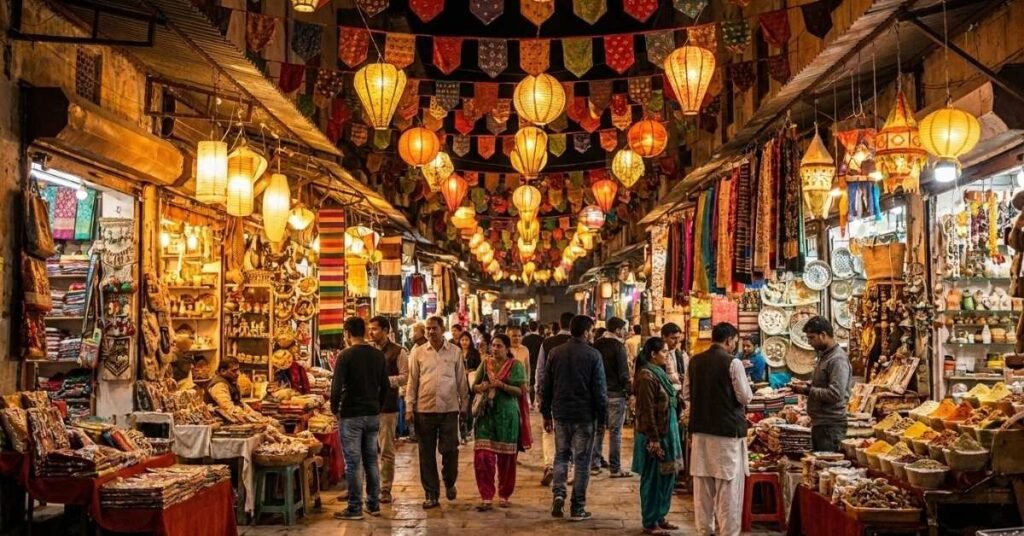
No trip to Srikalahasti feels complete without exploring its Kalamkari art. This is what truly sets the town apart from every other temple destination in South India.
Kalamkari means “pen craft,” and that is exactly how it is made. Artisans use a bamboo pen to hand-draw intricate designs directly onto cotton or silk fabric, then fill them in using only natural dyes pulled from flowers, roots, and vegetables. Common sources include iron rust, pomegranate, madder root, indigo, and turmeric. Most pieces depict scenes from the Ramayana and Mahabharata, so each saree or wall hanging tells a story rather than just showing a pattern.
We watched artisans work for nearly an hour, and the patience involved is incredible. This craft is even registered as a geographical indication of Andhra Pradesh under the Handicrafts category, which protects its authenticity.
For shopping, head to BP Agraharam or Sriram Nagar Colony, where most artisan families live and sell directly from their homes and small shops. Prices here are often better than what you will find in city boutiques.
A Kalamkari piece makes the perfect souvenir, since it is handmade, rooted in local tradition, and impossible to find anywhere else in quite the same way.
Quick Itineraries for Your Srikalahasti Trip
Not sure how much time to set aside? Here is a simple plan for both a quick visit and a relaxed two-day trip.
1-Day Itinerary
- Early morning (6 AM): Reach Srikalahasteeswara Temple for a peaceful darshan and Rahu-Ketu Pooja.
- Mid-morning: Climb the steps to Bhakta Kannappa Temple for the best view in town.
- Afternoon: Visit Bharadwaja Tirtham, then grab lunch at a local restaurant.
- Late afternoon: Drive to Veyilingala Kona Waterfalls for a short nature break.
- Evening: Shop for Kalamkari art at BP Agraharam before heading back.
2-Day Itinerary
- Day 1: Follow the 1-day plan above, but skip the waterfall trip and stay back to explore the temple complex more slowly. Stay overnight in Srikalahasti.
- Day 2: Start early and head out to Talakona Waterfalls for a full nature day, since it takes longer to reach. Return by evening, or combine it with a Tirumala visit if your route allows.
This pacing works well for both first-time pilgrims and travelers who want to mix spirituality with nature.
Planning a Road Trip in India?
Stop guessing! Calculate your exact fuel cost for Petrol, Diesel, CNG, or EV trips instantly.
🚗 Calculate Fuel Cost NowHow to Reach Srikalahasti and Best Time to Visit
Getting here is simple, since Srikalahasti is well connected to Tirupati and other major towns in Andhra Pradesh.
By Air: The nearest airport is Tirupati Airport, about 25 km away, with regular domestic flights.
By Train: Srikalahasti has its own railway station, connected to several cities across India.
By Bus: APSRTC buses run from Tirupati to Srikalahasti every 15 to 30 minutes, and the journey takes around 45 to 50 minutes. Buses also connect from Nellore and Chennai.
By Cab: Private cabs and app-based rides are easy to book from Tirupati, and most drop you right outside the temple entrance.
Best Time to Visit: October to March is ideal, since the weather stays cool and pleasant. Summers, from April to June, can get quite hot, especially during the long temple queue waits and hill climbs.
For live bus schedules and online ticket booking, check the APSRTC official booking site.
Frequently Asked Questions
Do I need a guide to visit Srikalahasti Temple?
No, the temple is easy to navigate on your own. Signs and priests are around to help if you need directions.
Can I do a day trip from Tirupati and still cover everything?
Yes, but you will need to pick between waterfalls and shopping if you want a relaxed pace. Trying to fit both in one day feels rushed.
Is public transport available between attractions?
Within town, autos are your best bet. For Talakona, a private cab or self-drive works better since buses are limited.
Can I perform Rahu-Ketu Pooja and still sightsee the same day?
Yes, most devotees finish the pooja by late morning and have the rest of the day free.
Is Srikalahasti safe for solo travelers?
Yes, it is a calm temple town with steady foot traffic throughout the day.
Do I need to carry cash?
Yes, smaller shops and temple counters often prefer cash, though UPI is becoming common.
Final Thoughts
Srikalahasti gave us more than we expected. It is not just a quick stop before Tirupati. Between the Vayu Lingam’s quiet power, the climb to Kannappa’s hilltop shrine, and the painted threads of Kalamkari art, this town holds onto something most places lose: a sense of unhurried devotion. Give it a full day, maybe two, and let it surprise you the way it surprised us.


