

The best time to visit Cherrapunji is October to February. These months offer the least rainfall, comfortable temperatures between 5°C and 18°C, and safe road conditions. October and November are especially good because the waterfalls are still full and the skies are clear. Avoid June to September if you dislike heavy rain.
I have seen too many travelers book a Cherrapunji trip without checking the weather first, and then spend three days stuck inside a resort watching rain pour down in sheets. That is not a trip. That is a very expensive staycation.
Knowing the best time to visit Cherrapunji is not just useful information. It is the single most important decision you will make before booking anything.
Cherrapunji, also known as Sohra, holds the title of one of the rainiest inhabited places on Earth. Rain here is not a surprise or a seasonal visitor. It lives here. This place receives rainfall 12 months of the year. So the real question is never “will it rain?” The real question is “how much rain can I handle?”
Your best window is mid-November through early March, when you get dry skies, comfortable trekking temperatures, and ideal conditions for root bridge hikes and cave exploration. If you are planning a Shillong to Cherrapunji trip, this timing makes the 55-km mountain road safe, scenic, and enjoyable
This guide breaks down every month, every season, and every trade-off so your trip money does not go to waste.
Cherrapunji Weather and Seasons Guide
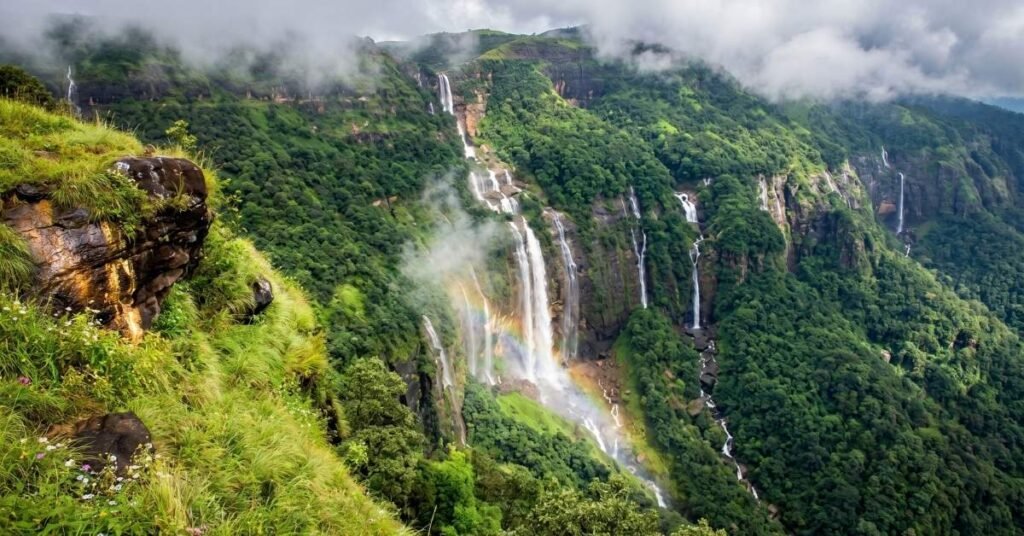
In my 10 years of exploring Meghalaya, I have visited Cherrapunji across every season. And I can tell you honestly: the season you pick will completely change your experience. Same place, wildly different trip.
Here is a full breakdown of each season so you know exactly what you are walking into.
Winter (October to February): The Best Season, No Contest
Winter in Cherrapunji is best for visiting. Temperatures may drop as low as 5°C, but the average stays around 15°C, making it an ideal time to see all the major attractions.
The skies are mostly clear. The roads are safe. The air is crisp and cool. October and November are my personal favourites because the waterfalls are still powerful from the monsoon runoff, but the rain has pulled back enough for trekking and sightseeing.
The months with the lowest rainfall in Cherrapunji are January, November, and December. If you are anxious about wasting money on a rain-blocked trip, these three months are your safest bet.
December and January do get cold at night. Pack layers. A light jacket is not enough; carry a proper woollen sweater.
Best for: Trekking to the Double Decker Living Root Bridge, visiting Mawsmai Cave, photography, and family travel.
Summer (March to May): Good, With One Catch
Summers in Cherrapunji last from March to May, with an average maximum temperature of 23°C and a minimum of around 13°C. The weather feels pleasant during the day, and March and April are genuinely lovely months to visit.
The catch? May.
May is the wettest summer month, and if you visit during May, you will find it difficult to move around. Rain picks up fast in May, and roads can get slippery before the full monsoon even officially begins. I have been stuck at a resort for half a day in late May waiting for a road to clear. Not fun.
If you are planning a summer trip, book for March or April. Avoid May unless you genuinely enjoy unpredictable weather.
Best for: Waterfall views, cave exploration, budget-friendly hotel rates compared to peak season.
Monsoon (June to September): Spectacular but Difficult
This is where it gets complicated. Cherrapunji receives up to 11,403 mm of rainfall during the monsoon months of May to September, making it one of the wettest places in the world.
The waterfalls during this season are absolutely breathtaking. Nohkalikai Falls is at its most dramatic. Seven Sisters Falls runs full force. The entire landscape turns a deep, electric green that no photograph can fully capture.
But here is the honest truth: monsoon is best avoided because the region receives maximum rainfall and it becomes very difficult for road travel. Landslides are a real risk. The Shillong to Cherrapunji road can close without notice. Rainfall during monsoon can happen throughout the day, pulling temperatures down significantly.
If you still want to come during monsoon, go in September. As September progresses, Cherrapunji sees a gradual decrease in rainfall, with temperatures ranging from approximately 19°C to 24°C. It is the safest monsoon month.
Best for: Waterfall chasers and photographers who accept the risk of rain and bad roads.
Planning a Road Trip in India?
Stop guessing! Calculate your exact fuel cost for Petrol, Diesel, CNG, or EV trips instantly.
🚗 Calculate Fuel Cost NowSeason Summary Table
| Season | Months | Temperature | Rainfall | Best For |
| Winter | Oct – Feb | 5°C – 15°C | Very Low | Trekking, sightseeing, caves |
| Summer | Mar – May | 15°C – 23°C | Low to Moderate | Waterfalls, caves, budget travel |
| Monsoon | Jun – Sep | 12°C – 20°C | Extreme (11,400+ mm) | Photography, waterfalls only |
For official travel advisories and seasonal event listings, you can check meghalayatourism.in before booking your trip.
4 Must-Visit Places in Cherrapunji (And When to Go)
Cherrapunji has more to offer than just rain and clouds. These four places are the ones that every traveler remembers long after the trip ends. Here is what you need to know about each one before you go.
Nohkalikai Falls
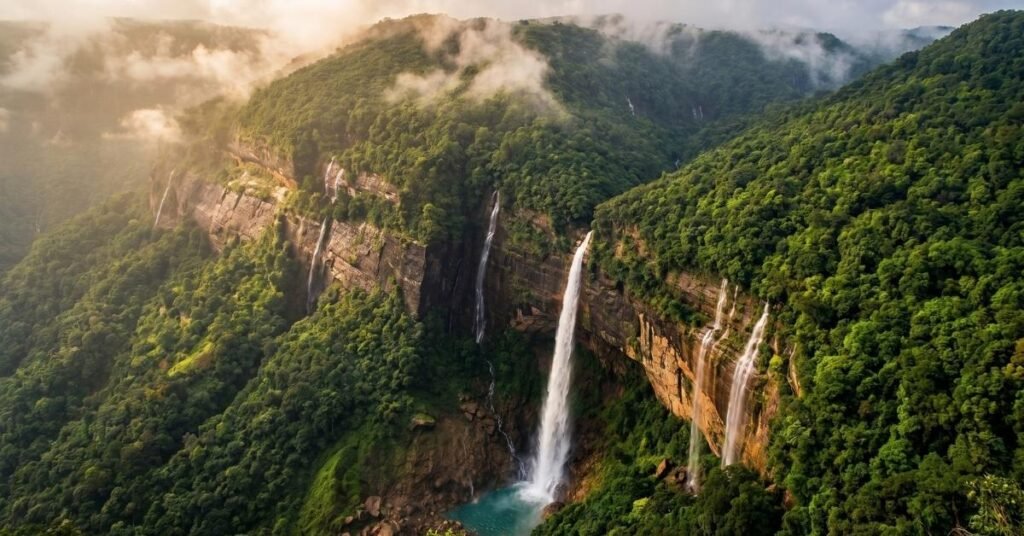
Nohkalikai Falls is India’s tallest plunge waterfall, dropping straight down from a height of 340 meters into a naturally green pool below. The colour of the water at the base is a pale turquoise that looks almost unreal.
Best time to visit: Late monsoon, specifically September and October. The falls are at their fullest and most powerful during this window, but the rain has started to ease off enough to make the viewpoint accessible.
Practical tips for Indian tourists:
- The viewpoint is well-maintained and easy to reach, even for older family members
- Carry a raincoat, not just an umbrella, because the mist from the falls will soak you even on a dry day
- Go early in the morning to avoid crowds and get clear photographs
- The pool at the bottom is not accessible for swimming, so do not plan for it
Double Decker Living Root Bridge
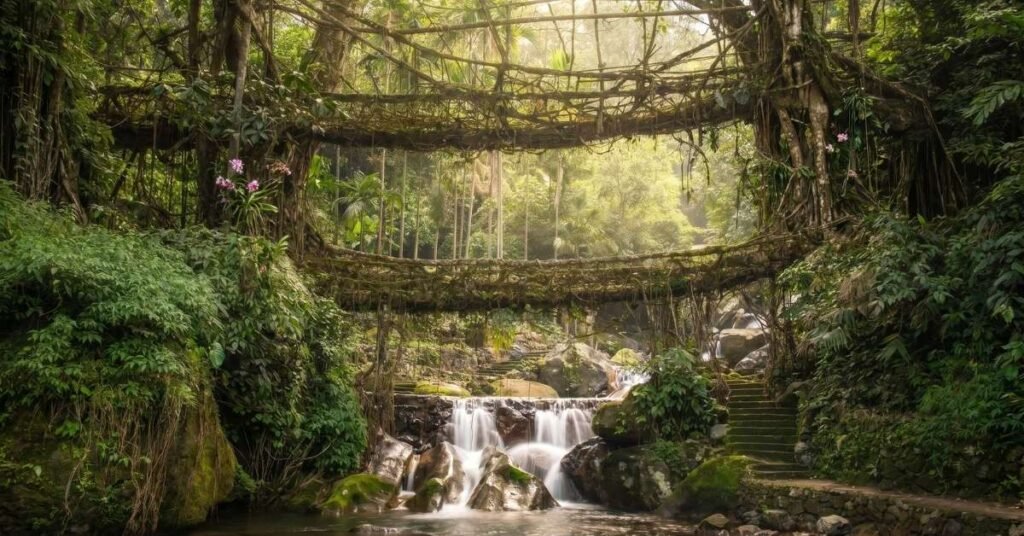
This is the most iconic attraction in all of Meghalaya, and it is unlike anything else in India. The bridge is made from the living roots of rubber trees, trained and woven over generations by the Khasi people. There are two natural bridges stacked on top of each other, which is why it is called the Double Decker.
Best time to visit: October to February (Winter). The trail is far safer and more enjoyable in dry conditions.
Practical tips for Indian tourists:
- The trek takes 5 to 6 hours for the round trip and is rated moderate to difficult
- Wear proper trekking shoes with grip, not casual sneakers
- Carry at least 2 litres of water per person and some light snacks
- The trek involves around 3,500 steps, so prepare your knees
- Note that the trek is closed on Sundays, so plan your Shillong to Cherrapunji trip day accordingly
Mawsmai Cave
Mawsmai Cave is a limestone cave located just a short drive from the main Cherrapunji town. It is one of the most visited caves in Northeast India, and for good reason. The formations inside, built over thousands of years, are genuinely stunning.
Best time to visit: October to April. The cave is accessible year-round, but the approach path gets slippery and difficult during heavy monsoon rain.
Practical tips for Indian tourists:
- The cave passage is narrow in several sections, so avoid if you have claustrophobia
- The entire walk through the cave takes about 15 to 20 minutes
- Wear shoes with grip since the floor inside is wet almost always
- Lights are provided inside, but carrying a small torch gives better visibility
Seven Sisters Falls
Seven Sisters Falls is one of the most visually dramatic waterfalls in India. It has seven separate streams that fall side by side from a high cliff, which is how it got its name. During the monsoon, all seven streams run at full force and the view is extraordinary.
Best time to visit: July to September for the full seven-stream view. Outside monsoon, some streams dry up completely.
Practical tips for Indian tourists:
- The best viewpoint is from the roadside on the Shillong to Cherrapunji highway
- No difficult trekking is required, making it ideal for families and older travellers
- Visit on a weekday if possible since weekends attract heavy crowds
- Early morning visits give you better visibility before clouds roll in
Where to Stay in Cherrapunji
Choosing the right hotel in Cherrapunji matters more than most people think. The town is spread out, roads are narrow, and if you are trekking to the Double Decker Living Root Bridge, you do not want to be staying 30 kilometres away from the trailhead. Here are the two hotels I recommend without hesitation.
Polo Orchid Resort
Polo Orchid Resort is the most well-known premium stay in Cherrapunji. The highlight is its infinity pool that looks out over the valleys and cliffs. On a clear winter morning, that view is something you will not forget.
This property is ideal for couples, families looking for comfort, and anyone who wants a relaxing base after a day of sightseeing. The rooms are well-maintained and the location gives you easy access to Nohkalikai Falls and Seven Sisters Falls viewpoints.
Best season to book: October to February. The views from the resort are at their clearest during winter months, and the infinity pool experience is far more enjoyable without constant rain.
Book well in advance during the October to December window because rooms fill up fast around the Nongkrem Dance Festival season.
Cherrapunjee Holiday Resort
If the Double Decker Living Root Bridge trek is the main reason for your trip, this is your base camp. Cherrapunjee Holiday Resort sits closer to the Nongriat village trailhead and has been a favourite among trekkers and backpackers for years.
The property is more budget-friendly than Polo Orchid, and the staff here genuinely know the trails. They can advise you on current road conditions, trek timings, and what to carry. That local knowledge alone is worth the stay.
Best season to book: October to February for trekking, or September if you want the waterfall views alongside the trek.
Essential Packing List for 2026

The wrong packing can ruin a great trip to Cherrapunji. Here is what you actually need, based on the season you are visiting:
- Waterproof rain jacket and bag cover: Even in winter, Cherrapunji can surprise you with light showers. A proper rain jacket beats an umbrella on narrow mountain trails every single time.
- Trekking shoes with strong grip: The paths to the Living Root Bridge and around Mawsmai Cave are wet and uneven. Casual sneakers or flat sandals are a safety risk, not just an inconvenience.
- Leech socks (for monsoon visitors): If you are visiting between June and September, leech socks are non-negotiable. Leeches are common on the forest trails and a good pair of leech socks saves you a lot of trouble.
- Warm layers for winter nights: Daytime in October to February feels pleasant, but temperatures drop sharply after sunset. A thermal inner layer under a fleece or woollen sweater is the right combination, not just a single heavy jacket.
- Oral rehydration salts and a basic medical kit: The trek to the Double Decker Bridge is physically demanding. Altitude, humidity, and long walking hours can drain your energy fast. Carry ORS sachets, basic pain relief, and a blister plaster or two in your bag.
Frequently Asked Questions
Is it safe to visit Cherrapunji in monsoon?
It is not the safest time to visit. Roads get slippery, landslides are possible, and heavy rain can disrupt your plans without warning. If you must visit during monsoon, September is the safest month as rainfall starts to ease off by then.
How many days are enough for Cherrapunji?
Two full days are the minimum. Day one for Nohkalikai Falls, Seven Sisters Falls, and Mawsmai Cave. Day two for the Double Decker Living Root Bridge trek, which takes 5 to 6 hours on its own. Three days gives you breathing room and a buffer for weather delays.
Are the waterfalls dry in winter?
Not completely. The major waterfalls like Nohkalikai still flow in winter, though with less force than during monsoon. Seven Sisters Falls may have fewer active streams in December and January, but the scenery around it remains beautiful.
What is the best month for the Shillong to Cherrapunji trip?
November and December are ideal. The roads are in good condition, the weather is clear, and the drive through the Meghalaya hills looks stunning with the post-monsoon greenery still intact.
Is Cherrapunji suitable for families with kids?
Yes, especially between October and February. Mawsmai Cave, the Nohkalikai viewpoint, and Seven Sisters Falls require no serious trekking and are accessible for children and older family members. Skip the Double Decker Bridge trek if you have very young children.
What should I wear in Cherrapunji?
Layer up regardless of the season. Light cottons with a waterproof jacket work well from March to May. For October to February, add warm thermals and a woollen layer for evenings and early mornings.
The Final Verdict
After 10 years of visiting Meghalaya and guiding travelers through every season, my answer stays the same every time someone asks me the best time to visit Cherrapunji.
Go in October or November.
You get the best of everything during these two months. The waterfalls are still running strong from the monsoon. The skies have cleared up. The roads are safe. The temperatures are perfect for trekking. And the landscape is a deep, lush green that makes every photograph look like it was edited.
If October and November do not fit your schedule, December to February is your next best option. Winter gives you the driest and safest conditions of the year.
Only go during monsoon if you are chasing waterfall photography and you have fully accepted that rain will control your itinerary, not you.
Plan smart, pack right, and Cherrapunji will give you a trip worth every rupee.


