

Dzukou Valley straddles the border of Nagaland and Manipur in Northeast India, sitting at an altitude of 2,452 meters. The trek is rated moderate to difficult, with Viswema and Jakhama (Zhakama) serving as the two base villages. There are no roads leading into the valley — the only way in is on foot.
My boots were still caked in mud when I decided I had to write this guide. After two trips to this valley, one in the rains and one in winter, I can tell you the best time to visit Dzukou Valley depends on what you want to see. For the famous Dzukou Lily in full bloom, go between late June and August. For golden grasslands, frosty mornings, and clear mountain views, plan your trek between October and March.
Both seasons have their charm, but they come with very different challenges. One is muddy and leech-heavy, the other is freezing but stunning. In this guide, I will break down both seasons, the routes from Viswema and Jakhama, where to stay, and the permits you need before you go.
The Two Faces of Dzukou: When Should You Plan Your Trek?

Here is the truth nobody tells you upfront. There is no single “best” time for Dzukou Valley. It really comes down to what kind of experience you are chasing. The valley transforms completely between the two main seasons, almost like two different places.
If you love flowers, soft green carpets, and misty mountains, monsoon is your season. If you prefer dry trails, golden meadows, and crisp mountain air, winter wins hands down. Let me break down both.
The Monsoon Magic (June to September)
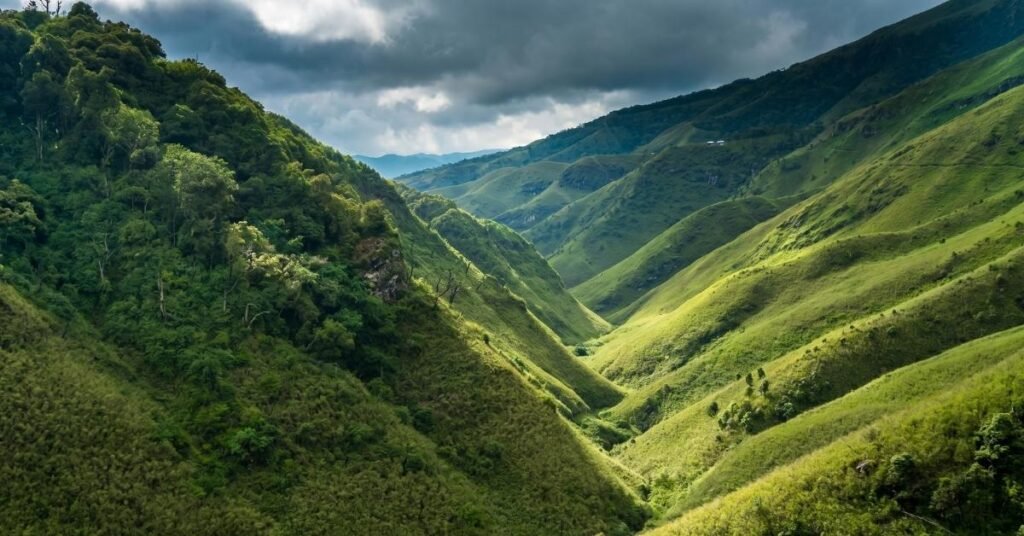
This is when the valley turns into a green wonderland. The hills are covered in soft moss and grass, and streams are full and flowing.
The biggest draw is the Dzukou Lily, an endemic flower found only in this region. It usually blooms between late June and August, painting parts of the valley in white and pink.
But monsoon also means heavy rain, slippery trails, and leeches on the route, especially through the forest sections. Carry good rain gear and be ready for muddy boots.
The Winter Frost (October to March)
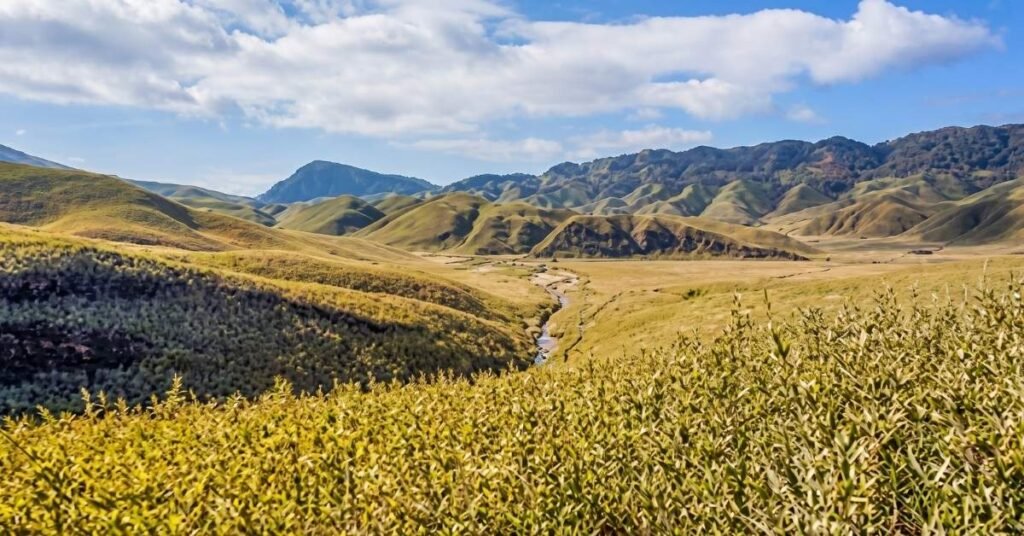
Winter changes the entire mood of the valley. The grass turns golden brown, and on cold mornings, you might even see frost covering the ground.
Skies are usually clear in winter, so you get those wide, dramatic views of the valley and surrounding peaks. December also brings the famous Hornbill Festival in Nagaland, making it a great time to combine culture with trekking.
The catch is the cold. Nights can drop close to freezing, so warm layers and a good sleeping bag are non-negotiable.
Here is a quick comparison to help you decide:
| Factor | Monsoon (June-Sept) | Winter (Oct-March) |
| Landscape | Lush green, misty | Golden brown, frosted |
| Highlight | Dzukou Lily blooms | Clear skies, mountain views |
| Trail condition | Muddy, slippery | Dry but cold |
| Leeches | Common | Rare |
| Night temperature | Mild | Near freezing |
| Bonus event | None major | Hornbill Festival (Dec) |
If flowers are your priority, plan around July. If comfort and views matter more, aim for November or early December.
Spring (March to May): The Blooming Season
Spring is when Dzukou Valley earns its reputation as the “Valley of Flowers of the Northeast.” Temperatures hover between 10°C and 25°C, making the trek physically comfortable without the brutal cold of winter or the leeches of monsoon.
The valley floor erupts in colour during these months. Rhododendrons, lilies, and the iconic Dzukou lily push through the ground in dense patches, turning the grasslands into something that looks almost staged. Trekkers who care about photography will find this the most rewarding window of the year.
Trail conditions are generally stable, and the skies are clearer than the monsoon months, which means better views from the ridge lines. If your priority is beauty over solitude, spring delivers.
Autumn (October to November): Clear Skies & Pleasant Treks
Once the monsoon pulls back, Dzukou shifts into one of its most underrated phases. The temperatures drop to a pleasant range, skies stay clear for days at a stretch, and the valley takes on shades of gold and amber as the grasslands dry out.
What makes autumn particularly good for first-timers is the trail conditions. The paths are well-defined and easy to navigate without the mud and slick rocks that plague the monsoon season. You get solid visibility, reliable footing, and none of the crowd pressure that peak summer brings.
The one trade-off: the Dzukou lily is long gone by this point. But if your goal is a rewarding trek with minimal friction, October and November are hard to beat.
How to Reach Dzukou Valley: Viswema vs. Jakhama Route

Before anything else, you need to reach Kohima, the capital of Nagaland. If you are coming by train, the nearest major station is Dimapur Railway Station, about 2.5 to 3 hours away by road. From Dimapur, you can take a shared cab or book a private taxi to Kohima.
Once in Kohima, both trek routes start from nearby villages. Here is how they compare.
Viswema Route (Easier, Good for Beginners)
Viswema is the most popular starting point, and for good reason. From Kohima, it takes about 30 to 40 minutes by road to reach Viswema village.
From there, you will cover roughly 8 km on a motorable road before the actual climb begins. The ascent itself is steep but manageable, and most trekkers reach the valley rim in 3 to 4 hours.
This gradual buildup makes Viswema ideal if you are trekking for the first time or prefer pacing yourself slowly.
Jakhama Route (Shorter but Steeper)
Jakhama offers a different experience altogether. The distance covered is shorter, but the climb is far steeper and more continuous, with very few flat breaks.
This route is better suited for fit trekkers who want a quicker, more intense climb, or for those descending after entering through Viswema.
How to Reach Dzukou Valley: Complete Transport Guide
Getting to Dzukou Valley takes some planning — there are no direct trains or flights to Kohima, so the journey requires piecing together two or three legs of travel.
Step 1: Fly into Guwahati or Dimapur
Your air options are Lokpriya Gopinath Bordoloi International Airport in Guwahati (Assam) or Dimapur Airport, which has more limited connectivity. Guwahati has better flight options from major Indian cities, making it the more practical entry point for most travellers.
Step 2: Get to Kohima
From Guwahati, you have two realistic options:
By Road: The drive from Guwahati to Dimapur or Kohima takes 10 to 12 hours. This works if you prefer flexibility or are travelling with gear.
By Train: A midnight train runs from Guwahati to Dimapur and takes a few hours. A Sleeper (non-AC) ticket costs ₹600 to ₹800 per person — a solid budget option if you book in advance.
Once at Dimapur, you’ll need a cab onward to Kohima:
| Route | Duration | Cost |
| Dimapur to Kohima (shared cab, off-season) | 2 to 2.5 hours | ₹300 – ₹400 per person |
| Dimapur to Kohima (shared cab, peak season) | 2 to 2.5 hours | ₹600 – ₹800 per person |
Step 3: Kohima to the Trek Starting Point
From Kohima, both major trailheads are accessible:
Via Viswema Village: The drive from Kohima to the base area takes around 2 hours. From Viswema village itself, a jeep ride to the actual trek starting point adds another 45 minutes on rough, bumpy terrain. This route is generally considered more accessible.
Via Jakhama (Zhakama): This route is more demanding and notably involves climbing or descending more than 8,000 steps. Factor that into your knees before choosing.
Where to Stay Before the Trek: Best Kohima Hotels & Homestays
Unless you plan on arriving in Kohima and immediately heading to the trailhead (which is not advisable), you’ll need at least one night in town. Kohima is your acclimatisation point, your supply run stop, and where you sort out permits.
The options range from bare-bones budget to proper comfort:
Maple Homestay
Lower Forest Colony, Kohima
A solid budget choice for travellers who just need a clean bed before an early start.
Price: ₹900 + Taxes per night
The Palm Guest House
Lerie Colony Road, Kohima
A mid-range option with more amenities. Good for a proper rest before or after the trek.
Price: ₹3,200 + Taxes per night
Abu Homestay
Billy Graham Road, Kohima
Another mid-range option that offers a more local, homestay feel without roughing it.
Price: ₹3,300 + Taxes per night
Niraamaya Retreats Aradura Kohima
National Highway 29
The premium pick in Kohima. Worth it if you want to treat yourself before or after a few days in the wilderness.
Price: ₹6,000 + Taxes per night
Book any of these in advance during peak trekking season (June to September), as rooms fill up quickly.
My Suggestion
If this is your first trek to Dzukou, start from Viswema and, if you have the energy, descend through Jakhama. This way, you experience both routes without overexerting yourself on day one.
Either way, carry enough water and snacks, since there are no shops once you start climbing. Wear proper trekking shoes with good grip, especially if you are visiting during monsoon when the trail gets slippery.
Planning a Road Trip in India?
Stop guessing! Calculate your exact fuel cost for Petrol, Diesel, CNG, or EV trips instantly.
🚗 Calculate Fuel Cost NowEssential Permits and Entry Formalities
Before you pack your bags, sort out your permit. Nagaland requires an Inner Line Permit (ILP) for all Indian tourists, except residents of Nagaland itself.
This permit is mandatory and checkpoints do ask for it, so do not skip this step.
How to Get Your ILP
The easiest way is to apply online before your trip. You can visit the Nagaland Official ILP Portal and fill in your details, upload your documents, and pay the fee.
Processing usually takes a day or two, so apply at least a few days before your travel date to avoid last-minute stress.
If you prefer the offline route, ILPs are also issued at counters in Dimapur and Kohima. However, this can mean standing in queues, so online is the smarter choice if you can plan ahead.
For Foreign Nationals
If you are a foreign traveler, the process is different. You will need a Protected Area Permit (PAP) or Restricted Area Permit (RAP), which usually requires more advance planning and documentation.
Keep both digital and printed copies of your permit handy throughout the trek, since you may need to show it at multiple checkpoints.
Where to Stay and Eat at the Top
Let’s talk accommodation, because this part surprises a lot of first-time trekkers. The only official place to stay inside Dzukou Valley is the Dzukou Valley Trekkers’ Hut, managed by the Southern Angami Youth Organization, or SAYO.
Set your expectations right from the start. This is not a resort. It is basic, functional, and built for trekkers who just need a roof and a warm corner to rest after a long climb.
Room Options
The hut offers dormitory-style rooms, which are the most common choice and budget-friendly. There are also VIP rooms, but do not expect luxury. They are simply a bit more private, with the same barebones setup.
If you enjoy camping, there is space available to pitch your own tent near the hut, which can be a fun option in clear weather.
Blankets are usually provided, but I would still recommend carrying your own sleeping bag, especially in winter when temperatures drop sharply at night.
Food at the Hut
Don’t expect a varied menu here. The food is simple and limited, think dal rice and hot Maggi noodles, which honestly taste amazing after a tiring trek.
It is a good idea to carry some extra snacks, energy bars, or instant food just in case, especially if you have specific dietary needs.
Seasonal Packing List
Packing right can make or break your trek to Dzukou Valley. Here is what I always carry, split by season.
For Monsoon Treks (June to September)
- A good quality raincoat or poncho, not just an umbrella
- Waterproof trekking shoes with strong grip
- A small pouch of salt to keep leeches away from your skin
- Quick-dry clothes, since everything stays damp
- A plastic cover or dry bag to protect your phone and documents
- Extra pairs of socks, because wet feet are miserable
For Winter Treks (October to March)
- Heavy thermals for both top and bottom
- A good quality sleeping bag rated for near-freezing temperatures
- Warm gloves, a woolen cap, and a neck scarf
- Sturdy trekking shoes, ideally with some insulation
- A headlamp or torch, since it gets dark and cold early
Common Essentials for Both Seasons
- Refillable water bottle
- High-energy snacks like dry fruits, chocolates, and biscuits
- A basic first aid kit with painkillers and blister plasters
- Copy of your ILP, both digital and printed
Pack light but smart. Every extra kilo feels heavier by the time you reach the top.
Dzukou Valley Trek Cost: Accommodation and Food Prices
Once you make it to the top of the valley, the SAYO Hut camp is your base. The setup is basic but functional — here’s exactly what it costs.
Stay Options
| Accommodation | Price |
| Dormitory (bare bed, no bedding) | ₹100 per night |
| Tent rental (fits 2 people) | ₹800 per night |
| Pitch your own small tent | ₹200 per night |
| Pitch your own large tent | ₹300 per night |
| Private cottage (attached bathroom) | ₹1,500 per night |
Bedding Rentals
- Sleeping bags: ₹500 to ₹900 (available for purchase at basecamp)
- Blanket (big): ₹100 per night
- Blanket (small): ₹200 per night
- Pillow: ₹50 per night
- Foam mat (for use inside tents): ₹50 per night
Food & Kitchen
| Item | Price |
| Rice with meat | ₹300 per plate |
| Veggies with dal and rice | ₹250 per plate |
| Maggi noodles | ₹80 per plate |
| Omelet | ₹80 per plate |
| Milk tea | ₹30 per cup |
| Red tea | ₹20 per cup |
| DIY kitchen usage | ₹100 per day |
Utensils are available on rent if you’re cooking your own meals: big vessel (₹100), small vessel (₹50), kettle (₹50), plates and cups (₹10 to ₹20 each).
Two things to know before you go: There is no electricity in the valley, so charge everything and carry at least one fully loaded power bank. There is also no mobile network — inform someone of your itinerary before you leave Kohima.
My Personal Experience and Survival Tips
I still remember my first attempt at the stone steps near Viswema. They looked simple in photos, but in real life, they go on forever. My thighs were burning halfway up, and I had to remind myself to take it slow and steady instead of rushing.
One thing I learned the hard way is to start early. We began our climb around 7 am, and by the time we reached the top, the weather was still clear. Trekkers who started late got caught in sudden mist, which made the trail confusing and slippery.
The cold nights at the hut were another surprise. Even with blankets, I was glad I had packed my own sleeping bag and an extra thermal layer. The temperature drops fast once the sun goes down.
My biggest tip is this. Do not compare your pace to others. Some people sprint up the steps, others take breaks every ten minutes. Both are fine. The valley is not going anywhere, and the view at the top makes every painful step worth it.
Frequently Asked Questions
Is Dzukou Valley safe for solo female travelers?
Yes, the trek is generally safe and popular with solo travelers. However, it is always smart to inform the SAYO staff at the hut about your plans and avoid walking alone after dark.
Is there mobile network in the valley?
Network coverage is very weak to almost non-existent once you start climbing. Inform your family before you lose signal, and do not rely on your phone for navigation.
Can beginners do this trek?
Yes, especially via the Viswema route, which has a gradual climb. Just go at your own pace and take breaks when needed.
Do I need a guide?
The trails are fairly clear, but hiring a local guide adds safety and helps support the local community.
Is camping allowed inside the valley?
Yes, camping space is available near the Trekkers’ Hut, though carrying your own tent is recommended.
What is the entry fee for Dzukou Valley?
SAYO collects a nominal entry fee at the checkpoint, which goes toward maintaining the trail and the hut.


