The short answer is this: you take a train or bus to Kulem (Collem) railway station, and from there, you board an official Jeep Safari run by the Dudhsagar Tour Operators Association. That is the only legal way to reach the base of the falls. No private vehicle, no scooty, no shortcut.
I know how confusing this sounds when you first start researching how to reach Dudhsagar Falls from Goa. Every third blog tells you something different. Some say “just rent a bike.” That advice will get you stopped at the national park checkpoint and turned right back around.
I have done this trip, and I am telling you the real ground reality.
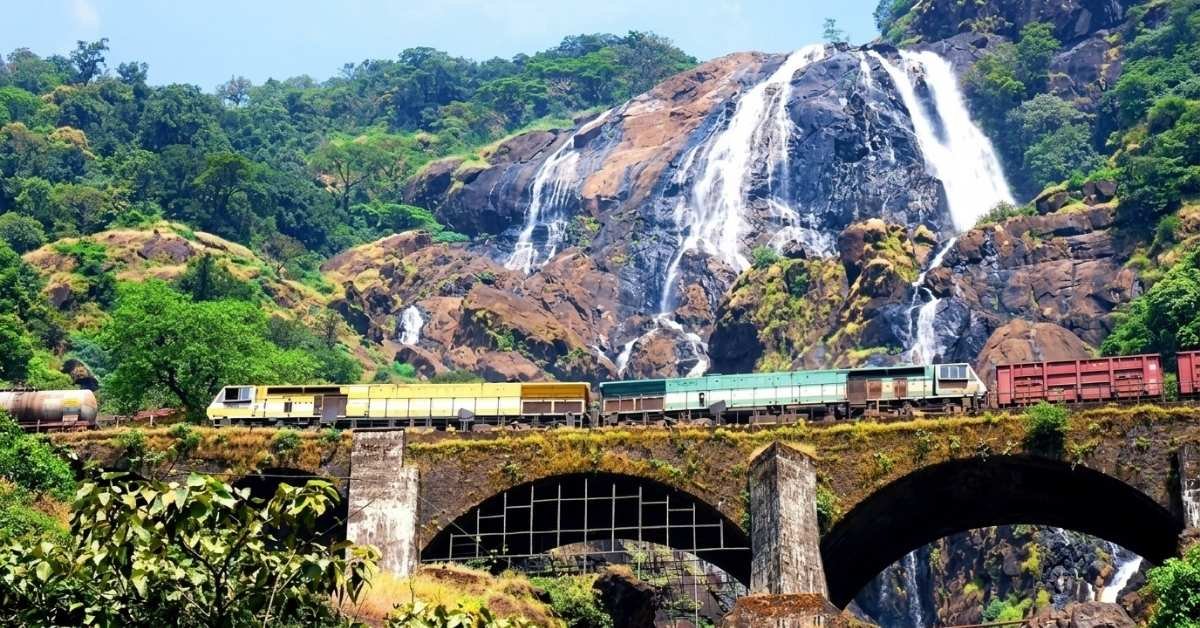
Dudhsagar is not your average waterfall photo-op. At 310 meters, standing inside Bhagwan Mahavir Wildlife Sanctuary, this is one of India’s tallest waterfalls. Getting there requires planning. But once you are standing at that base with cold white water crashing around you, every ounce of that planning feels worth it.
This guide will walk you through the entire thing, step by step.
The Golden Rule: Reaching Kulem First
Every year, hundreds of tourists show up at the national park gate on a rented scooty, confident they will just ride in. The park ranger sends them back. Every single time.
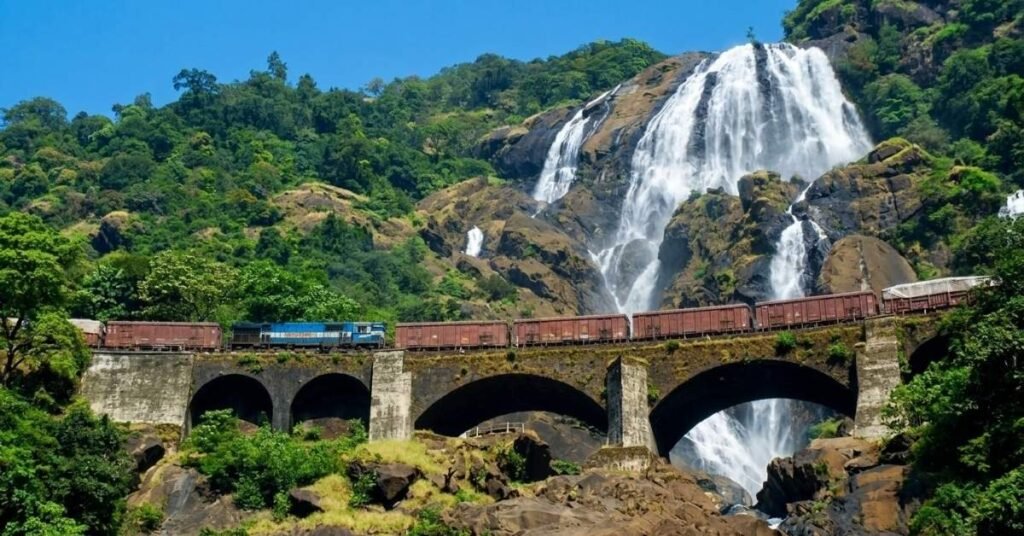
Here is the reality: Dudhsagar Falls sits deep inside the Bhagwan Mahavir Wildlife Sanctuary. The Forest Department has a strict rule. No private vehicles, no self-drive cars, no scooties are allowed past the checkpoint. This is not a suggestion. It is enforced.
Your entire journey is actually two separate legs, and you need to plan both.
Leg 1: Your Hotel/Starting Point to Kulem Village
- This is on you to arrange independently.
- Kulem (also called Collem) is a small village about 60 km from Panaji and roughly 46 km from Madgaon Junction.
- You can get here by train, bus, or taxi.
- Kulem Railway Station (station code: QLM) is your target destination for Leg 1.
Leg 2: Kulem to the Waterfall Base
- This leg is handled entirely by the official Dudhsagar Tour Operators Association.
- You board a shared or private jeep from Kulem and they take you inside the sanctuary.
- Swimming at the base, entry timings, everything is managed by them.
- You cannot do this leg on your own. Period.
Getting Leg 1 right is what most people skip planning for. That is exactly where things fall apart.
Planning a Road Trip in India?
Stop guessing! Calculate your exact fuel cost for Petrol, Diesel, CNG, or EV trips instantly.
🚗 Calculate Fuel Cost NowLeg 1: How to Reach Kulem from Your Hotel
Where you are staying in Goa changes everything about how you plan Leg 1. North Goa and South Goa are two completely different starting situations.
From North Goa (Baga, Calangute, Panjim)
Let me be straight with you. North Goa to Kulem is roughly 70 to 80 km depending on your exact starting point. It sounds manageable on a map. On the road, it is a solid 2 to 2.5 hour drive through winding ghats.
Your main options from North Goa:
- Rent a car or scooty (most popular choice): You drive yourself to Kulem, park outside the national park checkpoint, and then join the jeep safari. This gives you full freedom over your start time, which matters a lot because jeep safaris fill up fast in peak season. Budget around Rs. 600 to Rs. 1,200 for a scooty rental for the day.
- Kadamba State Bus: GSRTC (Kadamba) runs buses from Panaji’s Kadamba Bus Terminal towards Mollem. From Mollem, you will need a local auto or shared vehicle to reach Kulem. This is the budget route but expect the total journey to take 3 hours or more with connections. Fare is well under Rs. 150.
- Taxi or cab: The comfortable but expensive option. A one-way cab from North Goa to Kulem can cost Rs. 1,500 to Rs. 2,500 depending on the vehicle and your negotiation. Good if you are traveling in a group and can split the cost.
My honest suggestion for North Goa travelers: rent a car, start by 6 AM, and reach Kulem before 9 AM to secure your jeep slot without stress.
From South Goa (Margao, Palolem)
South Goa travelers have a serious advantage. Kulem is only about 40 to 50 km from Margao (Madgaon), and the absolute best way to cover this distance is by train.
In my experience, taking the early morning train from Madgaon Junction is the smartest move any budget traveler can make. The train runs through gorgeous forest terrain, costs almost nothing, and drops you directly at Kulem Railway Station (QLM). You step off the platform and the jeep operators are right there.
Check current train schedules on IRCTC before your trip since timings change by season.
Here is a quick comparison to help you decide:
| Mode | Approx Cost | Time Taken |
| Local Train (Madgaon to Kulem) | Rs. 15 to Rs. 30 | 1 to 1.5 hours |
| Private Taxi (South Goa) | Rs. 800 to Rs. 1,500 | 1 to 1.5 hours |
| Rented Scooty (South Goa) | Rs. 400 to Rs. 600 (rental) | 1.5 hours |
| Kadamba Bus (North Goa) | Under Rs. 150 | 3+ hours |
If you are staying anywhere near Margao or Palolem, the train is not just the cheapest option. It is genuinely the most enjoyable one.
Leg 2: Kulem to the Waterfall (Jeep Safari vs. Trekking)
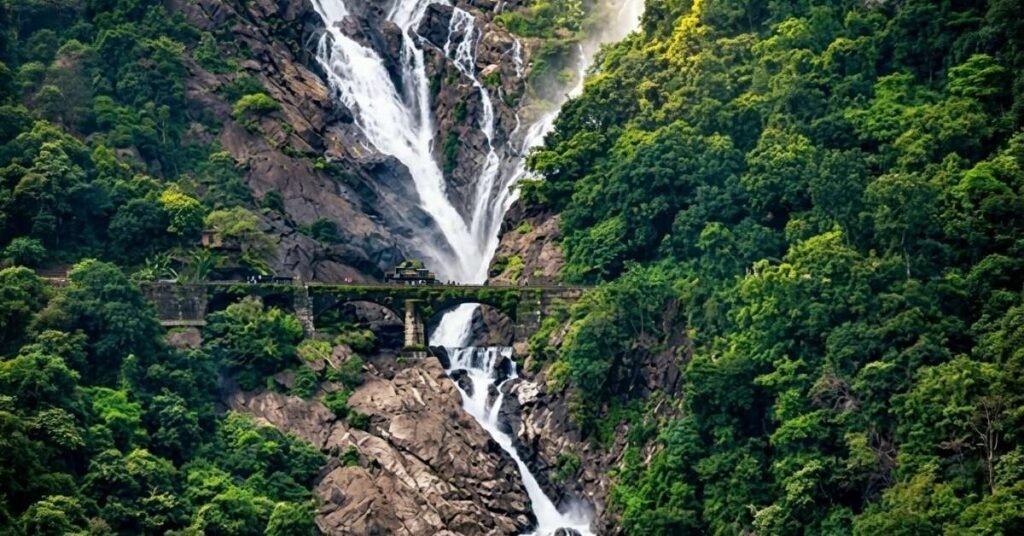
You are at Kulem now. The waterfall is roughly 11 km inside the sanctuary. This is where your journey gets interesting, and where most first-timers make their second big mistake by not booking early enough.
The Official Route: Dudhsagar Jeep Safari
The Dudhsagar Tour Operators Association runs the only legal motorized access into the sanctuary. These are not fancy tourist vehicles. They are rugged, modified jeeps built specifically for the off-road terrain inside the forest, and the ride is every bit as adventurous as the destination.
Here is exactly how the booking works on the ground:
- Walk to the jeep stand right outside Kulem Railway Station. You cannot miss it.
- Approach the counter of the Dudhsagar Tour Operators Association and book your seat.
- Seats are sold on a per-person basis for shared jeeps. Expect to pay approximately Rs. 500 to Rs. 700 per person for a round trip, though prices can shift slightly by season.
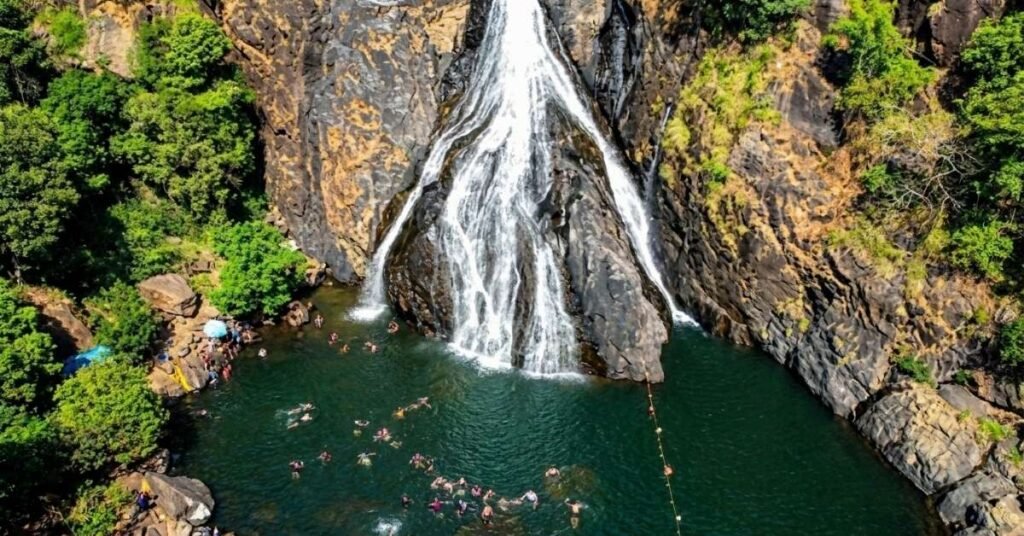
- Life jacket rental at the waterfall base costs around Rs. 50 to Rs. 100 extra. You need this if you plan to wade into the pool. Do not skip it.
- The jeep ride itself takes roughly 45 minutes each way through dense jungle, rocky trails, and a few stream crossings that will genuinely make you hold your breath.
- Once the jeep drops you at the final point, there is a 15-minute walk through forest trail to reach the base of the falls.
My strong advice: reach Kulem before 9 AM during peak season (October to January). Slots fill up fast, and the association does cap the number of vehicles entering the sanctuary per day to protect the ecosystem. For the most current entry fees and guidelines, check the Goa Forest Department / Goa Tourism official site before you travel.
The Trekking Reality Check
Every few months, a viral reel surfaces showing someone walking along the railway tracks to Dudhsagar. It looks adventurous. It is also illegal.
Let me be completely clear about this:
- Trekking on active railway tracks is officially banned by the Railway Protection Force (RPF).
- Trekkers caught on the tracks face heavy fines and legal action. This is enforced, not just written in a rulebook.
- The tracks are active. Trains pass through with limited warning time on those curves.
If you genuinely want to trek to Dudhsagar, there are authorized forest trekking routes operated with proper permits through the sanctuary. These require advance permission from the Forest Department and are typically guided. Ask specifically about this when you reach the Kulem jeep stand or contact Goa Tourism for updated permissions.
The jeep safari is not a compromise. It is the real, legitimate, full experience. Take it.
Crucial Timings, Costs, and Rules to Remember
No fluff here. Just the facts you need before you leave your hotel room.
Best Time to Visit Dudhsagar
- October to January: Peak season. Jeep safaris are fully operational, the water level is strong, and swimming at the base is safe. This is the window you want.
- July to September (Monsoon): Safaris are closed due to dangerous water levels and flooding inside the sanctuary. The only way to see the falls during monsoon is from a passing train. Spectacular view, but you cannot get to the base.
- February to June: Water levels drop significantly. The falls lose their dramatic force. Not the ideal window unless you have no other option.
For Detailed Season Info Read Our Guide on best time to visit dudhsagar.
Start Your Day Early. Seriously.
- Reach Kulem by 7:00 AM to 8:00 AM at the latest during peak season.
- Jeep slots are limited and the queue builds up fast after 9 AM.
- Early arrival also means you beat the afternoon heat inside the jungle.
Cost Breakdown at a Glance
- Jeep Safari (round trip, shared): Rs. 500 to Rs. 700 per person
- Sanctuary entry fee: Rs. 30 to Rs. 50 per person (approximately)
- Camera fee: Rs. 30 to Rs. 50 for a personal camera
- Life jacket rental at the base: Rs. 50 to Rs. 100 (mandatory for entering the water)
Practical Ground Rules
- Life jackets are non-negotiable if you plan to wade in. The current is stronger than it looks.
- No plastic bags are allowed inside the sanctuary. Carry a cloth bag.
- Lockers and cloakrooms: Yes, basic luggage storage facilities exist at Kulem. Leave your heavy bags there before boarding the jeep.
- Carry cash only. Digital payments are not reliably available at the jeep stand.
My Final Pro Tips for a Hassle-Free Trip
These are the things I wish someone had told me before my first visit.
- Pack a waterproof bag or dry bag. The jeep crosses actual streams. Your phone and wallet will get wet if they are just sitting in a cloth tote.
- Wear closed-toe shoes with grip. The trail from the jeep drop-off to the falls base is rocky and slippery. Flip flops will make you miserable.
- Bring your own snacks but guard them fiercely. There are monkeys at the base, and they are bold, experienced thieves. Eat quickly and keep bags zipped.
- Wear your swimming clothes under your regular outfit. There are no changing rooms at the base. Doing the awkward towel-dance on a rocky riverbed is nobody’s idea of fun.
- Download offline maps before you leave. Mobile signal inside the sanctuary is essentially zero.
Dudhsagar is one of those rare trips where the journey itself earns its place in the memory. The bumpy jeep ride, the stream crossings, the first glimpse of white water through the tree line. It all adds up to something genuinely worth the early morning alarm.
Plan it right, start early, and it will deliver.
FAQs
Can I take my own car to Dudhsagar?
No. Private vehicles are strictly prohibited inside Bhagwan Mahavir Wildlife Sanctuary. The jeep safari from Kulem is the only legal option.
Is the trip safe for kids?
Yes, for children above 5 years. The jeep ride is bumpy and the water current is strong, so keep young children away from the pool edge and ensure life jackets are worn.
Is Dudhsagar open all year?
Jeep safaris operate from October to June approximately. During peak monsoon (July to September) safaris are suspended for safety reasons.
Can I book the jeep safari online?
Currently, booking happens in person at the Kulem jeep stand on the day of your visit. Arrive early to secure your slot.
How long does the full trip take?
Plan for a full day. Roughly 6 to 7 hours including travel to Kulem, the safari, time at the base, and return.
Is the railway track trek legal?
No. Trekking on active railway tracks is officially banned by the RPF and carries heavy penalties. Do not attempt it.