Visit ancient Chola temples, watch live Panchaloha bronze casting in Swamimalai, drink filter coffee at a century-old hotel, and attend the Mahamaham festival if you time it right.
Kumbakonam is one of Tamil Nadu’s most rewarding temple towns. It sits about 40 km from Thanjavur and packs more history per square kilometer than most cities in India. This guide covers every major thing to do in Kumbakonam, from UNESCO World Heritage sites to local silk weaving villages nearby.
You will find practical timing tips, real restaurant names, and a day-by-day breakdown. No paid promotions, no filler. Just honest, useful travel information for first-time visitors and repeat travelers alike.
Whether you have one day or three, this guide helps you spend your time well.
Top Temples You Cannot Miss

Kumbakonam has over 188 temples inside the city limits. But you do not need to visit all of them. Focus on these key stops to get the best experience.
Adi Kumbeswarar Temple
This is the largest and oldest Shiva temple in Kumbakonam. The main gopuram (tower) rises about 128 feet and is visible from a distance. Legend says Lord Shiva himself mixed the nectar of immortality here, giving the town its name.
Key things to see inside:
- The main Kumbeswarar Shivalingam shrine
- The large temple tank adjacent to the complex
- Intricate Dravidian stone carvings on the gopuram
Plan at least 45 minutes here. Go early morning before 9 AM to avoid crowds and heat.
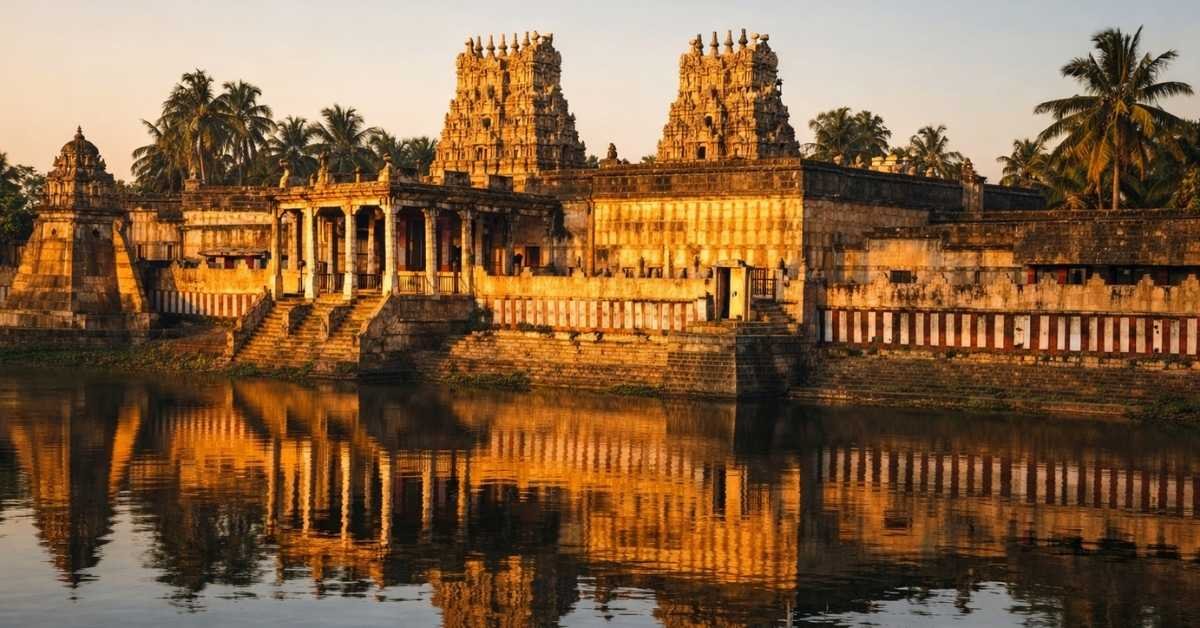
Mahamaham Tank
This sacred tank covers 6.2 acres and sits at the heart of Kumbakonam’s spiritual identity. It is surrounded by 16 small mandapams and connects to several temples on its banks.
The Mahamaham festival happens every 12 years. The next one is in 2028. During the festival, millions of pilgrims take a holy dip believing it equals bathing in all sacred rivers of India at once. If you are planning a trip around 2028, book accommodation at least a year in advance.
Even outside festival years, the tank is calm and worth a quiet morning walk.
Airavatesvara Temple, Darasuram (UNESCO World Heritage Site)
This temple is about 4 km from Kumbakonam town in the village of Darasuram. It was built by Rajaraja Chola II in the 12th century and is a UNESCO World Heritage Site along with the Brihadeeswarar temples.
What makes it special:
- The chariot-shaped mandapam at the entrance
- Stone steps that are said to have once produced musical notes when struck
- Remarkably preserved Chola-era sculptures with fine detail
Spend at least one hour here. The site is less crowded than Thanjavur, so you can explore slowly.
Temple Timings (All Major Temples)
| Session | Timing |
| Morning | 6:00 AM to 12:00 PM |
| Afternoon (Closed) | 12:00 PM to 4:00 PM |
| Evening | 4:00 PM to 8:00 PM |
Note: Temples are strictly closed between 12 PM and 4 PM. Plan your temple visits in the morning or late afternoon only.
Things to Do Beyond Temples: Art & Silk

Temples close at 12 PM sharp and reopen only at 4 PM. That gives you a solid four-hour window. Do not waste it sitting in your hotel room. This is the best time to explore Kumbakonam’s craft and shopping scene.
Watch Live Bronze Casting in Swamimalai
Swamimalai is a small town about 6 km from Kumbakonam. It is the only place in India where traditional Panchaloha bronze idols carry a GI (Geographical Indication) tag. These idols are made using the lost-wax casting technique, locally called “Madhuchista Vidhana.”
Here is how the process works:
- Artisans first sculpt the idol shape using beeswax
- They coat the wax model in layers of clay to create a mold
- The mold is heated, melting the wax out completely (hence “lost-wax”)
- Molten Panchaloha metal (an alloy of five metals: gold, silver, copper, brass, and iron) is poured into the mold
- After cooling, the clay is broken away to reveal the finished bronze idol
Each idol can take days or even weeks to complete. No two pieces are identical.
Panchaloha Divine Handicrafts Centre is one of the best workshops to visit. You can watch artisans at work, ask questions, and buy directly from the makers. This is not a tourist trap. It is a working studio.
Shop for Silk Sarees in Darasuram
Darasuram, the same village that houses the Airavatesvara Temple, is also known for traditional silk weaving. Local weavers produce sarees with Chola-era motifs and temple border designs.
What to look for:
- Sarees with temple border (korvai) patterns
- Pure silk with zari work
- Handloom pieces directly from weaver households
Avoid buying from large shops on the highway if you want authentic handloom. Ask your hotel or auto driver to take you to a local weaver’s home instead.
You can also explore more about Tamil Nadu’s living craft traditions on the Tamil Nadu Tourism official website.
Quick Afternoon Checklist (12 PM to 4 PM)
- Visit Swamimalai bronze workshop
- Shop for silk sarees in Darasuram
- Have lunch at a local hotel (see next section)
- Browse small street stalls near Mahamaham Tank for brass lamps and puja items
Where to Find Authentic Kumbakonam Food & Coffee

Food in Kumbakonam is simple, vegetarian, and deeply satisfying. The town is especially famous for one thing above everything else: degree coffee.
What Makes Kumbakonam Degree Coffee Different
Most coffee in India is made by mixing decoction with a combination of milk and water. Kumbakonam degree coffee uses no water at all. It is made with pure, full-fat cow’s milk poured through a traditional brass filter. The result is thick, creamy, and slightly frothy.
The word “degree” refers to the purity of the milk tested using a lactometer. Only milk that passes the purity test earns the name.
Many places across Tamil Nadu now claim to serve degree coffee. In Kumbakonam, you can still find the real thing.
Where to Eat and Drink
Sri Mangalambika Vilas Coffee Hotel has been serving customers since 1914. That is over 110 years of continuous operation. They serve traditional tiffin breakfasts like idli, vada, and pongal alongside their famous degree coffee. Go before 9 AM for the freshest experience.
Sri Venkataramana Hotel is the go-to spot for a proper sit-down South Indian meal. They serve pure vegetarian Brahmin-style food on banana leaves. Expect a full meal with rice, sambar, rasam, kootu, and a sweet. Lunch service typically runs during temple closing hours, making it the perfect midday stop.
Quick Food Tips
- Eat breakfast early, hotels get crowded fast
- Avoid bottled coffee from tourist shops near temple gates
- Always ask if the coffee is made with pure milk before ordering
How to Reach & Getting Around

Kumbakonam is well connected by rail and road. Most travelers find train the most comfortable option.
By Train:
- Kumbakonam Railway Station sits on the Chennai-Thanjavur main line
- Regular express trains connect it to Chennai, Trichy, and Madurai
- Book tickets in advance on IRCTC to avoid last-minute hassles
By Road:
- State buses run frequently from Thanjavur (40 km), Trichy (90 km), and Chennai (280 km)
- Taxis and cabs are available from all nearby cities
By Air:
- Trichy International Airport is the nearest, about 90 km away
- Hire a cab from the airport directly to Kumbakonam (roughly 1.5 to 2 hours)
Local Transport:
- Auto-rickshaws are the easiest way to get around town
- Always negotiate the fare before you get in
- A local auto for a full-day temple circuit costs around 500 to 700 rupees
FAQs on Kumbakonam
What is the best time to visit Kumbakonam?
October to March is ideal. The weather stays cool and pleasant. Avoid peak summer months between April and June as temperatures cross 40 degrees Celsius.
How many days are enough for Kumbakonam?
Two to three days covers the main temples, Swamimalai bronze workshops, Darasuram, and local food stops comfortably.
How do you travel locally in Kumbakonam?
Auto-rickshaws are your best option. They are easy to find near the temple entrances. Always agree on the fare before starting your ride.
Kumbakonam rewards travelers who go slow and pay attention. Skip the rush, follow the temple timings, and let the town show you its real character.
Final Thoughts on Kumbakonam
Kumbakonam is not a place you rush through. It is a town where a 12th-century temple stands next to a working bronze studio, and a 110-year-old coffee hotel still serves the best cup in Tamil Nadu.
The key to enjoying it is simple. Plan your temple visits around the morning and evening windows. Use the afternoon break for bronze workshops, silk shopping, and a proper banana leaf lunch. Do not skip the Airavatesvara Temple in Darasuram. Most tourists miss it, and that is their loss.
If you can time your trip for 2028, the Mahamaham festival is a once-in-12-years experience worth planning for well in advance.
Kumbakonam does not need much hype. It just needs the right traveler, one who is curious, unhurried, and willing to look closely.