

The best time to visit Kamakhya Temple is between October and March, when the weather is cool and manageable. Avoid June during Ambubachi Mela unless you specifically want to attend the festival.
I have stood in the general darshan queue at Kamakhya Temple at 5 AM, watched that queue stretch past a hundred people before sunrise, and still waited close to three hours. That experience taught me something very quickly: visiting this temple without a plan is a mistake.
Kamakhya Temple, sitting on top of Nilachal Hill in Guwahati, Assam, is one of the most powerful Shakti Peethas in India. The spiritual energy here is unlike anything else. But the best time to visit Kamakhya Temple is not just about weather. It is about crowds, darshan timing, festivals, and how much of your day you are willing to spend waiting in line.
This guide gives you all of that, straight.
Understanding the Kamakhya Experience: Spirituality vs. Comfort
Before picking a travel date, ask yourself one honest question: what kind of traveler are you?
Kamakhya Temple is not a quick sightseeing stop. It sits at the top of Nilachal Hill, and the climb, the crowds, the chanting, and the smell of incense all hit you together. Some people find that overwhelming. Others find it exactly what they came for.
Your answer to that question changes everything about when you should go.
Two Types of Kamakhya Visitors
| Factor | The Spiritual Pilgrim | The Peaceful Explorer |
| Crowd Tolerance | High. Crowds feel like energy. | Low. Crowds feel like stress. |
| Preferred Months | June (Ambubachi Mela), major Hindu festivals | October to March |
| Primary Goal | Be part of the collective devotion | Personal prayer, photography, calm darshan |
| Queue Willingness | Will wait for hours without complaint | Prefers VIP darshan or early morning visits |
| Overall Vibe Sought | Raw, overwhelming, transformative | Peaceful, unhurried, intimate |
Both experiences are valid. Both are real. The temple delivers differently depending on when you arrive and how prepared you are.
What Makes Nilachal Hill Different
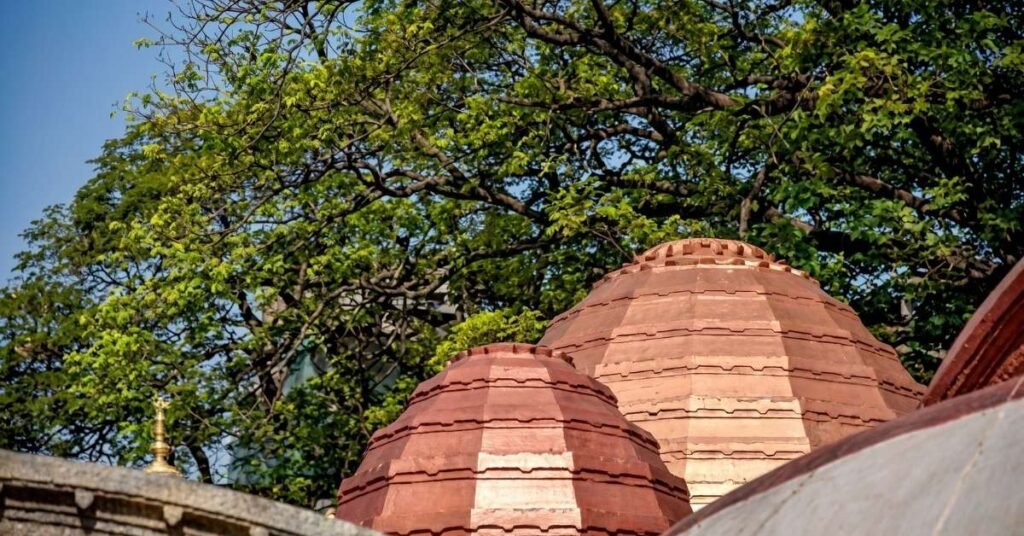
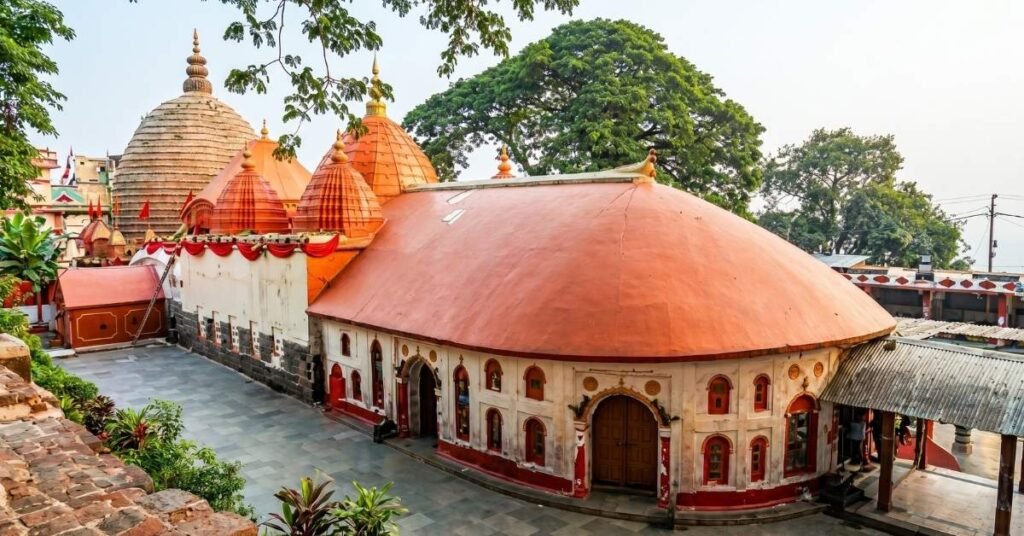
Kamakhya Temple does not look like a typical temple from the outside. The beehive-shaped dome, the red flowers, the steady stream of devotees moving up the hill – it has its own atmosphere that starts even before you enter the sanctum.
The main deity worshipped here is Maa Kamakhya, also known as the Bleeding Goddess. The temple is one of the 51 Shakti Peethas of India, which is why it draws pilgrims from every corner of the country throughout the year. There is no single off-season where the temple is completely empty.
What changes across seasons is the crowd density, the heat, the rainfall, and your overall comfort level during the visit.
Start planning your Assam trip early, especially if you are flying in. Check Assam Tourism’s official site for regional travel advisories, festival calendars, and accommodation options near Guwahati.
The next section breaks down each season honestly, month by month.
Planning a Road Trip in India?
Stop guessing! Calculate your exact fuel cost for Petrol, Diesel, CNG, or EV trips instantly.
🚗 Calculate Fuel Cost NowSeasonal Breakdown: When Should You Actually Go?
The honest answer is that every season at Kamakhya Temple has a trade-off. Here is what each one actually looks like on the ground.
Winter (October to March): The Sweet Spot
This is the most comfortable time to visit Kamakhya Temple, and most experienced travelers will tell you the same.
Guwahati’s weather between October and March stays between 10 and 25 degrees Celsius. The air is dry, the skies are clear, and the climb up Nilachal Hill does not leave you drenched in sweat. Morning darshan, especially between 6 AM and 8 AM, feels genuinely peaceful during this window.
A few things to keep in mind:
- Navratri (October and April) brings very heavy crowds. If your dates fall during Navratri, book VIP darshan passes in advance or arrive before 5:30 AM for general darshan.
- December and January are the calmest months overall. Tourist footfall is present but manageable.
- February and March are ideal for combining the temple visit with a Brahmaputra river cruise or a trip to Umananda Temple on Peacock Island.
If you want good weather, shorter queues, and a calmer atmosphere, October to March is your window.
Summer (April to June): Harsh But Historically Significant
April and May in Guwahati are hot. Temperatures regularly touch 35 to 38 degrees Celsius, and the humidity makes it feel worse. The climb up the hill in the afternoon can be genuinely exhausting.
That said, June brings one of the most significant events in the Shakti calendar: Ambubachi Mela.
The temple closes for 3 to 4 days during this period, marking the annual menstruation of Maa Kamakhya. When it reopens, hundreds of thousands of pilgrims are already waiting. If you want to experience the raw, collective energy of that moment, no other time of year compares.
But be prepared. Hotels book out weeks in advance. Crowds are at their absolute peak. Logistics require serious planning.
Monsoon (July to September): Beautiful but Risky
The monsoon transforms the landscape around Nilachal Hill. The Brahmaputra River swells, the surrounding hills turn a deep green, and the temple complex takes on a misty, atmospheric quality that is genuinely striking.
However, the practical challenges are real:
- The stone stairs leading up to the temple become extremely slippery during rain. Footwear with grip is not optional, it is necessary.
- Heavy rainfall can disrupt travel plans, cause road flooding, and delay flights into Guwahati.
- Outdoor photography, which many visitors plan for, becomes difficult.
Visit during monsoon only if you are a seasoned traveler comfortable with unpredictable conditions. The views are worth it, but the risks are equally real.
The Ambubachi Mela: The Most Powerful Time to Visit

If you ask any serious devotee about Kamakhya Temple, they will eventually bring up Ambubachi Mela. There is nothing else like it in the Shakti tradition.
What is Ambubachi Mela?
Ambubachi Mela is an annual festival that usually falls in June, during the monsoon season. It marks the period when Maa Kamakhya, the presiding deity of the temple, is believed to undergo her annual menstrual cycle. The festival treats this as a sacred and powerful event, not something to be hidden or considered impure.
During this time, the temple remains closed for 3 to 4 days. No darshan, no entry. The earth itself is considered to be in a state of rest.
When the temple reopens, the energy is extraordinary. Tantric saints, sadhus, pilgrims, and devotees from across India and beyond gather at Nilachal Hill. The Ambubachi Mela 2026 dates typically fall in the third week of June, though the exact dates are confirmed by the temple trust closer to the festival.
Who Should Visit During Ambubachi Mela
This festival is ideal for:
- Devoted pilgrims who want to be part of a once-a-year spiritual event
- Photographers and travel writers documenting India’s living traditions
- Travelers who have already visited the temple before and want a deeper experience
This festival is not ideal for:
- Elderly visitors or anyone with mobility challenges
- Families with young children seeking a calm, short darshan
- First-time temple visitors who are unfamiliar with large crowd management
- Anyone with a fixed return travel schedule, as the reopening date can shift slightly
Plan accommodation in Guwahati at least 4 to 6 weeks before the festival. Options near Kamakhya Junction Railway Station tend to fill up first.
My Insider Hacks: Beating the Crowds & VIP Darshan
I want to be straightforward with you here, because most travel blogs will not be.
The Reality of General Darshan
The general darshan queue at Kamakhya Temple is free. It is also, on a regular weekend or during any festival period, a 4 to 6 hour wait. I have done it. I stood in that line on a Saturday morning in November, arrived at 6 AM thinking I was early, and still did not reach the sanctum until past 11 AM.
The queue winds through narrow covered passages. It gets hot, it gets loud, and there is very little place to sit. If you are travelling with elderly parents, young children, or anyone with a health condition, putting them through that queue is genuinely not worth it.
The VIP Darshan Pass: Worth Every Rupee
The temple trust offers a Special Entry or VIP darshan pass that dramatically cuts your waiting time. In my experience, what takes 5 hours in the general queue takes 30 to 45 minutes with a VIP pass.
Here is what you need to know about it:
- Passes are available through the Kamakhya Temple Trust counter, which is located near the temple premises
- Online availability for VIP darshan passes is increasingly being made available through official channels, so check the temple trust’s official resources before your visit
- Pricing is nominal compared to the time you save
- The pass is especially worth it for families, elderly visitors, and anyone visiting Guwahati on a short trip with limited days
The Single Best Timing Hack
Reach the base of Nilachal Hill before 5:30 AM.
I cannot stress this enough. The temple opens early for morning darshan, and the crowd at 5:15 AM looks nothing like the crowd at 8 AM. Even in general queue, an early arrival on a weekday can cut your wait down to 60 to 90 minutes.
Pair an early start with a VIP pass on weekends or festival days, and you have cracked the Kamakhya logistics puzzle.
Essential Logistics & FAQs
Getting There
- By Train: Kamakhya Junction Railway Station is the closest railhead to the temple, roughly 2 kilometres away. Guwahati Railway Station is about 7 kilometres from the temple.
- By Air: Lokpriya Gopinath Bordoloi International Airport connects Guwahati to most major Indian cities. From the airport, the temple is approximately 20 kilometres away by road.
- Local Transport: Auto-rickshaws, app cabs, and shared taxis are readily available from both railway stations to the temple base.
Book your trains and check Assam connectivity via Indian Railways official site.
FAQs
How long does VIP darshan actually take?
With a valid VIP pass, most visitors complete their darshan within 30 to 45 minutes, including time inside the sanctum.
Is there a dress code for Kamakhya Temple?
There is no strictly enforced dress code, but modest clothing is strongly recommended out of respect. Avoid shorts and sleeveless tops.
Can elderly parents easily access the main shrine?
The climb involves stairs and uneven stone paths. Palanquin services are available at the base of Nilachal Hill for elderly or differently-abled visitors at a reasonable charge.
What should I carry inside the temple?
Carry minimal belongings. Large bags are not permitted inside. Keep your mobile phone accessible but use it respectfully inside the premises.
Is photography allowed inside Kamakhya Temple?
Photography is generally restricted inside the main sanctum. Outdoor areas of the temple complex allow photography.
What is the best day of the week to visit?
Weekdays, particularly Tuesday to Thursday, see noticeably lighter crowds compared to weekends and Mondays.
Kamakhya Temple rewards those who plan carefully and arrive prepared. Whether you are chasing the spiritual intensity of Ambubachi Mela or simply seeking a quiet morning darshan on Nilachal Hill, timing and preparation make all the difference between a frustrating visit and a deeply memorable one.


